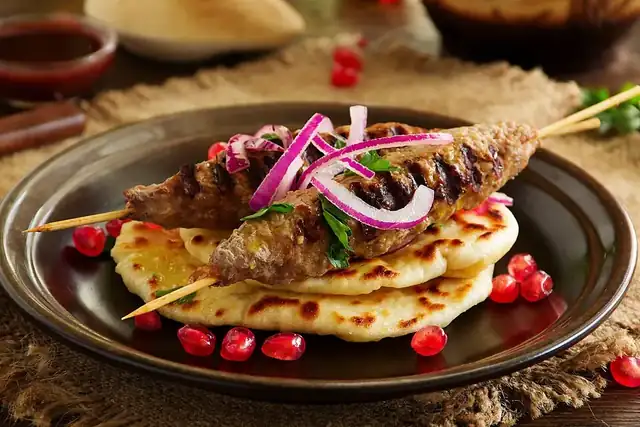
The dish is a starting point for exploring a wider food story. The guide below looks more closely at its background and different forms. When you want to cook, visit the recipe collection for ingredient quantities and step-by-step methods.
In this story
OverviewAustria, Germany, and SwitzerlandCambodiaIndonesiaIreland and the United KingdomHispanic and Lusitanic worldMalaysia and SingaporeOverview
A fried egg is a dish made from one or more eggs which are removed from their shells, placed into a frying pan and cooked. They are traditionally eaten for breakfast or brunch in many countries but may also be served at other times of the day.
Austria, Germany, and Switzerland
Fried eggs (Spiegeleier; singular Spiegelei) are a crucial part of such traditional German dishes as Strammer Max (the egg is fried on one side with an unbroken yolk, and served "sunny side up" atop an open ham sandwich) or Hamburger Schnitzel / Holsteiner Schnitzel / Fernfahrerschnitzel ("trucker's schnitzel")a similarly prepared fried egg served on a Wiener Schnitzel.
Fried eggs over (or side-by-side with) pan-fried potatoes is another common dish, sometimes served with spinach as a third component of the meal. Some German cooks break the yolk and distribute it across the surface of the white during the frying.
All of the above are typically lunch, rather than breakfast, dishes, although eggs themselves (like boiled or scrambled eggs) are a common part of a German breakfast.
Cambodia
In Cambodia, a fried egg is often served on top of a common dish called beef lok lak. It is made of a ring of spinach, onion finely shaven, and tomato with either a portion of venison or beef with gravy, topped with a fried egg, either duck or chicken egg.
Indonesia
In Indonesia, fried eggs are served either as telur ceplok or telur mata sapi (Indonesian for "bull's eye egg") which refer to sunny side up eggs, as telur dadar (omelette) or as telur orak-arik (scrambled eggs). The fried eggs are either setengah matang which is half cooked with still runny yolk or matang which is well done. When speaking English, an Indonesian waiter may ask if you want the egg fried "one side" or "two sides". Fried eggs, especially bull's eye egg, are a popular topping for Indonesian fried rice (nasi goreng) and fried noodle (mie goreng), either freshly prepared noodle or cooked from instant noodle Indomie Mi goreng. Many Indonesians also tend to dip their kerupuk (deep-fried fish crackers) into the runny yolk of the egg, a favourite among locals. [citation needed]
A simple dish of fried sunny side up egg served on top of steamed rice drizzled with kecap manis sweet soy sauce, is a favourite dish among Indonesian children. Other than served with rice, fried eggs might be served with bread as a sandwich for breakfast. Seasoning includes salt and pepper, sweet soy sauce, and sometimes hot and spicy sambal chili paste.
Ireland and the United Kingdom
Fried eggs can be served on toast, with chips, or in a sandwich, with bacon, sausages, and a variety of condiments. Eggs are often part of the full breakfast commonly eaten in Britain and Ireland. Fried eggs are often served with ham or gammon steak as a popular pub meal. The egg is cooked on high heat and hot fat, oil, or water may be splashed onto the top of the egg to baste it and cook the white. They are usually cooked without turning over.
Hispanic and Lusitanic world
In Portugal and Brazil, a runny egg placed over a steak with a side dish of rice and fried potatoes (and the addition of black beans in Brazil) is called a bife a cavalo, literally "horse-riding steak".
A similar dish, with the name bife a caballo in Spanish, is also common in Argentina, Ecuador, and Uruguay (called churrasco); fried potatoes and salad replace the beans and rice.
In Colombia's bandeja paisa the egg is accompanied with avocado and chorizo.
In Chile and Peru, a fried egg is included in Lomo a lo Pobre, Chorrillana, Paila de huevo, and several other dishes.
In Ecuador, llapingachos include a sunny-side up egg served over pan-seared cheesy mashed potatoes and fried sausage.
In northern Mexico, huevos montados (riding eggs) are served with refried beans and fried potatoes (or french fries). Another common method of serving eggs in Mexico is huevos a la mexicana, which blends fried eggs with diced tomato, onion, and green chili pepper; the amount of pepper added is often to order.
There are several other egg dishes in Mexico which combine different ingredients: Huevos motuleños (in Yucatán), aporreados (mixed with refried beans), and huevos rancheros (sunny side up eggs served over a corn tortilla, covered with spicy salsa). Also, in some parts of Mexico, fried eggs are served with fresh tomato, onions, and cilantro salsa. Red chili is optional, as is a blended sauce.
In Spain fried eggs (huevos fritos) are a common dish. They are eaten alone, with meat, or with sausages. In this country, a fried egg served with boiled rice covered in tomato sauce is called arroz a la cubana in Spanish and the same dish is served in parts of Latin America, Italy (so-called occhio di bue), the Philippines, and Portugal as well.
Poet Nâzım Hikmet said in an interview that he stayed with a Spanish friend for a month and ate fried eggs almost every day.
Malaysia and Singapore
Just as in Indonesia, nasi goreng is a popular fried rice dish in Malaysia and Singapore and is often served with a fried egg.
More to savor

English Breakfast
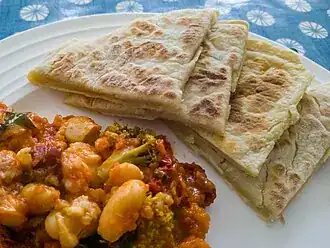
Tattie Scones

Omelettes: How Beaten Eggs Become a Meal