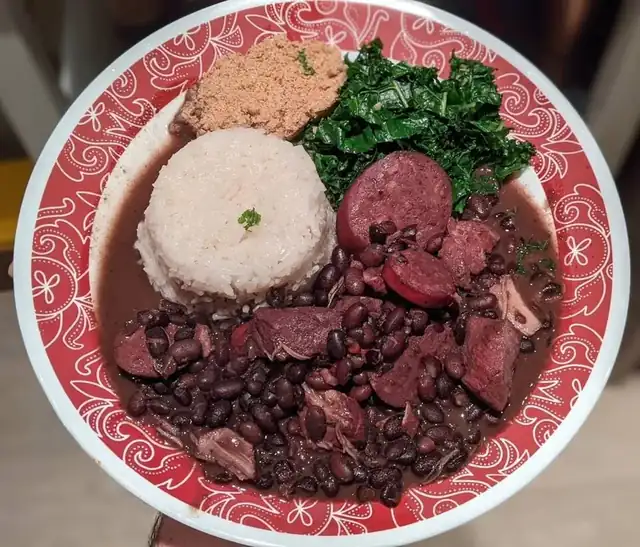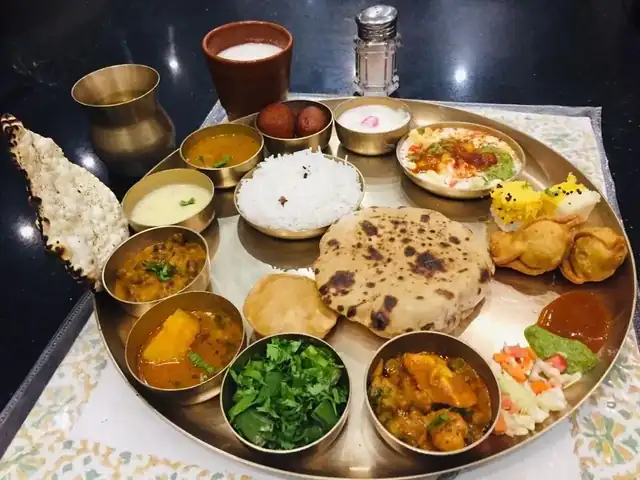
Use the regional background below as a starting point for exploring the food, rather than expecting one dish to represent every household. Food traditions differ within a country and continue to change through travel, migration, and everyday cooking.
In this story
OverviewIngredientsCooking techniquesNational and regional cuisinesStreet foodFestival dishesDiaspora and fusion cuisinesOverview
Indian cuisine is not a single ethnic cuisine; instead, it represents the country's national culinary identity. It consists of the regional and ethnic cuisines native to the Indian subcontinent. Indian food has been influenced by religion, cultural choices and traditions.
Agriculture spread to the Indus Valley Civilisation around 7000 BCE, bringing cereal cultivation. Spices such as turmeric and cardamom were being grown in India by 3,000 BCE. Indian cooking uses simple equipment such as a burner, and labour-intensive processes such as grinding flavourings by hand. Techniques unique to the area include frying of a paste of onion, garlic, and ginger in oil, then browning the meat or vegetables in that oil, and then adding liquid stepwise; and adding fried spices to cooked dishes. Many dishes are specific to India's many religious festivals. Religious faiths influence the region's cuisines, since Hindus often do not eat beef; Muslims avoid pork; and Jains are strict lacto-vegetarians.
Ingredients
Staple foods of Indian cuisine include pearl millet (bājra), rice, whole-wheat flour (aṭṭa), and a variety of lentils, such as masoor (most often red lentils), tuer (pigeon peas), urad (black gram), and moong (mung beans). Lentils may be used whole, dehusked—for example, dhuli moong or dhuli urad—or split. Split lentils, or dal, are used extensively.
Many Indian dishes are cooked in vegetable oil, but peanut oil is popular in northern and western India, mustard oil in eastern India, and coconut oil in southern India. Gingelly (sesame) oil is common in the south since it imparts a fragrant, nutty aroma. sunflower, safflower, cottonseed, and soybean oils have become popular across India in the 21st century. Hydrogenated vegetable oil, known as Vanaspati ghee, is another popular cooking medium.
The most important and frequently used spices and flavourings in Indian cuisine are whole or powdered chilli pepper (mirch, introduced by the Portuguese from Mexico in the 16th century), black mustard seed (sarso), cardamom (elaichi), cumin (jeera), turmeric (haldi), asafoetida (hing), ginger (adrak), coriander (dhania), and garlic (lasoon). Panch phoron is popular in eastern India. Goda masala is a sweet spice mix popular in Maharashtra. Leaves commonly used for flavouring include bay leaves (tejpat), coriander leaves, fenugreek (methi) leaves, and mint leaves. The use of curry leaves and roots for flavouring is typical of Gujarati and South Indian cuisine.
Cooking techniques
Indian cooking uses simple equipment, but is extremely labour-intensive. Food is cooked over a burner, whether gas or using a traditional fuel such as charcoal or dried cowpats. Pressure cookers are widely used to cook the food more quickly. Two techniques are unique to the region. In one, a paste is made from onion, garlic, ginger and oil, and fried until soft; then the meat or vegetables are browned in that oil; and finally, liquid is added stepwise, stirring all the time, giving a result that in Colleen Taylor Sen's view merges sauteing, stir-frying, and stewing. In the other technique, named variously bagar, chhauk, or takar, spices are fried in ghee or oil, and added to a cooked dish of dal or curry.
Dishes are often accompanied by pickles, made by soaking food such as meat, vegetables, or fruit in vinegar or in concentrated salt water. The equipment used for cooking is often limited, from traditional earthenware pots to modern cast iron or stainless steel vessels such as the two-handled karahi. Herbs, spices and garlic are often crushed with a stone rolling pin or with a pestle and mortar.
National and regional cuisines
Cuisine differs across India's regions and states. The cook Madhur Jaffrey writes that India, larger than Europe (excluding Russia), has cuisines in its states as diverse as those of European countries, while the climates which govern what foods can be grown range from the coconut palm-rich tropical south to the mountains of the Himalayas in the North. Alan Davidson states that there is, all the same, an underlying unity in Indian cuisine, since meals are based on cereal (rice or wheat) accompanied by savoury dishes often containing pulses and vegetables, and carefully applied spices "especially ginger and garlic". Another distinctive feature is India's widespread vegetarianism. Davidson notes that international perception of Indian cuisine is clouded by the fact that Indian restaurants, both in India and abroad, are often operated by Punjabis and people from Bangladesh.
Punjabis have for instance helped to make tandoori dishes popular.
Street food
Indian street food varies by region, with specialties particular to the street food of Chennai, of Old Delhi, and of Mumbai among others. Muslim influence in Delhi has resulted in meat snacks such as kebabs, while Kolkata has kati rolls with chicken and egg. Vada pav, a potato dumpling inside a bun, is a characteristic street snack in Mumbai, while idli and sambar is popular in Chennai.
Festival dishes
Hindus prepare special dishes for different festivals. Kheer and Halwa are two desserts popular for Diwali. Puran poli and Gujia are prepared for Holi in different parts of India.
Diaspora and fusion cuisines
The Indian diaspora has spread its culinary traditions throughout the world. These cuisines have been adapted to local tastes, and have affected local cuisines. The international appeal of curry has been compared to that of pizza. Indian tandoor dishes such as chicken tikka enjoy widespread popularity.
More to savor

Chicken Vindaloo
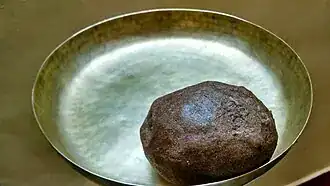
South Indian Millet Swallow (Mudde)
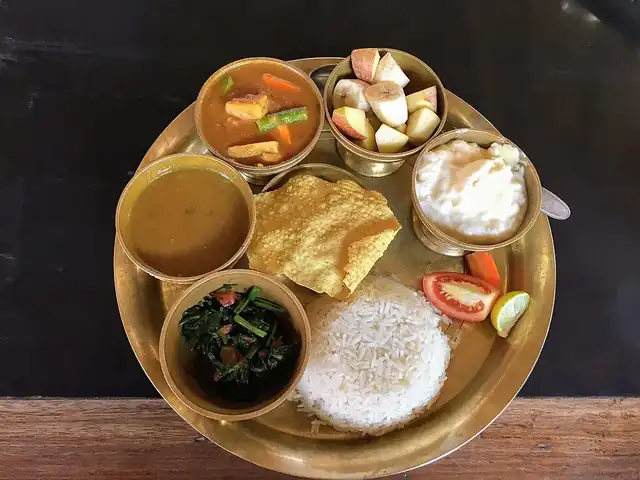
A Taste of Nepal: Food Across Regions and Communities