Use the regional background below as a starting point for exploring the food, rather than expecting one dish to represent every household. Food traditions differ within a country and continue to change through travel, migration, and everyday cooking.
In this story
OverviewKhas cuisineLimbu cuisineLohorung cuisineMadhesi cuisineNewa cuisineRai cuisineOverview
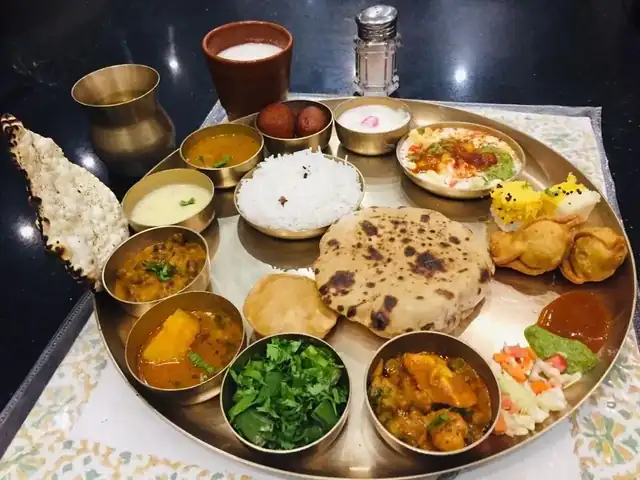
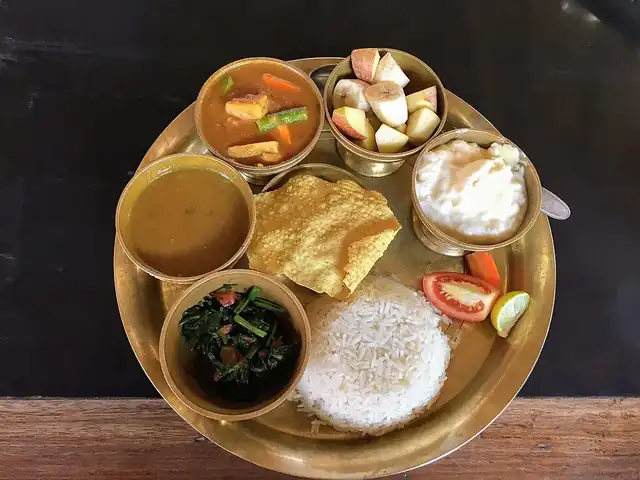
Nepali cuisine comprises a variety of cuisines based upon ethnicity, alluvial soil and climate relating to cultural diversity and geography of Nepal and neighboring regions of Sikkim and Gorkhaland. Dal-bhat-tarkari (दाल भात तरकारी) is eaten throughout Nepal. Dal is a soup made of lentils and spices, bhat—usually rice but sometimes another grain—and a vegetable curry, tarkari. Condiments are usually small amounts of spicy pickle (achaar, अचार) which can be fresh or fermented, mainly of dried mustard greens (called gundruk ko achar) and radish (mula ko achar) and of which there are many varieties. Other accompaniments may be sliced lemon (nibuwa) or lime (kagati) with fresh green chilli (hariyo khursani) and a fried papad and also Islamic food items such as rice pudding, sewai, and biryani.
Dhindo (ढिंडो) is the national dish of Nepal, primarily made from flour of millet and is served with achar of gundruk 'dried spinach'. A typical example of Nepali cuisine is the Chaurasi Byanjan (चौरासी व्यञ्जन) set where bhat (rice) is served in a giant leaf platter (patravali) along with 84 different Nepali dishes each served on small plates. It is mostly served during weddings and Pasni (rice feeding ceremony).
Momo is a Himalayan dumpling, filled with minced meat in a flour dough, given different shapes and then cooked by steaming. It is one of the most popular foods in Nepal and the regions of Sikkim, Darjeeling and Kalimpong in India where Nepali-speaking Indians have a presence. Momo were originally filled with buffalo meat but are now commonly filled with goat or chicken, as well as vegetarian preparations. Special foods such as sel roti, finni roti and patre are eaten during festivals such as Tihar. Sel roti is a traditional Nepali homemade ring-shaped rice bread which is sweet to taste. Other foods have hybrid Tibetan and Indian influence.
Chow mein is a Nepali favorite in modern times based on Chinese-style stir-fried noodles. It is one of the most beloved everyday staple lunches in Nepali households.
Khas cuisine
Dal-bhat-tarkari is the standard meal eaten twice daily traditionally by the Khas people. However, with land suitable for irrigated rice paddies in short supply, other grains supplement or even dominate. Wheat becomes unleavened flat bread (roti or chapati). Maize (makai), buckwheat (fapar), barley (jau), or millet (kodo) become porridge-like (dhido or ato). Tarkari can be spinach and fresh greens (sag), fermented and dried greens (gundruk or sinki), white radish (mula), potatoes (alu), green beans (simi), tomatoes (golbeda), cauliflower (kauli), cabbage (bandakopi), pumpkin (farsi), etc. The climate of the hilly region remains moderate throughout the year. This kind of climate is perfect for horticulture.
Fruits traditionally grown in the hills include mandarin orange (suntala), kaffir lime (kagati), lemon (kaagati), Asian pear (nashpati), and bayberry (kaphal), mangoes (aanp), apples (syauu), peach (aaru), plum (aalcha or aarubakhara), apricot (kurpani) . In some seasons there is an excess amount of these fruits produced. These excess fruits are often preserved or otherwise made use of in the form of alcohol, pickles, dried fruits and fruit juice. These alcohol are also serves in a different rituals of Newari culture.
Dahi (yogurt) and curried meat (masu) or fish (machha) are served as side dishes when available. Chicken (kukhura) and fish are usually acceptable to all including the Khas Brahmin (Bahun) caste. Observant Hindus never eat beef (gai ko masu). They also eschew buffalo and yak meat as being too cow-like. Domestic pork (sungur ko masu) was traditionally only eaten by aadibasi, however wild boar (bangur ko masu) was traditionally hunted and eaten by magars. A strain derived from wild boar is now raised in captivity and used for meat that is increasingly popular with Pahari ethnicities and castes that did not traditionally eat pork. They however eat wild boar (bandel) as it is considered clean due to its forest habitat though they do not eat pork meat.
Limbu cuisine
The Limbu have unique ethnic foods including kinema (fermented soybeans), yangben (Reindeer Moss), bamboo shoot preparations, millet- or buckwheat-based bread, and Limbu Tongba (a traditional millet beer). Pork, chicken is eaten in some Eastern regions like Dharan.
Lohorung cuisine
Lohorung are indigenous to eastern Nepal. They have a variety of food in their cuisine made from local ingredients. Some of them are Wachipa, Wamik, Masikdaam, Sibring, Sel roti, Bawari, Dhule Achar, Saruwa, Chamre, Dibu, and so on.
Madhesi cuisine
Food in the Madhesh Province south of Sivalik Hills refers to mirror cuisines such as Maithili cuisine in the east, Tharu cuisine in the west, and Bhojpuri cuisine in the center and near west of Madhesh province. Further west, there is Mughlai-influenced Awadhi cuisine—particularly eaten by the substantial Muslim population around Nepalganj bordering Madhesh region.
Madhesi diets can be more varied than in the Middle Hills because of greater variety of crops grown locally plus cash crops imported from cooler microclimates in nearby hill regions, as well as from other parts of Greater Nepal. Fruit commonly grown in the Madhesh include mango (aap), litchi, papaya (armewa/mewa), banana (kera/kela/kola) and jackfruit (katahar/katahal).
Newa cuisine
Newars are an urbanized ethnic group originally living in the Kathmandu Valley, but now also in bazaar towns elsewhere in the world and Middle Hills. In the fertile Kathmandu and Pokhara valleys, local market farmers find growing produce more profitable than grain, especially now that cheap rice and other staples can be trucked in. Furthermore, Newar households have relatively high incomes and their culture emphasizes food and feasting.
Although daily Newar food practices consist mostly of components from the generic hill cuisine, during ritual, ceremonial and festive eating, Newar dishes can be much more varied than the generic Pahade/Pahari ones. Newari cuisine widely uses buffalo meat. For vegetarians, meat and dried fish can be replaced by fried tofu or cottage cheese. The cuisine has a wide range of fermented preparations, whereas Pahade/Pahari cuisine has beyond a few aachar condiments.
Rai cuisine
During festivals, Rai families prepare meals often featuring pork achaar; chyang, a locally brewed beer; rayo ko saag, a pork and mustard greens dish; dhido, a bread made from millet, maize, or buckwheat flour; kinema, fermented soybeans; vegetable, goat, and mutton curries; sukuti; and beaten rice.
More to savor

Austrian Napkin Dumpling (Serviettenknödel)

Chicken Vindaloo
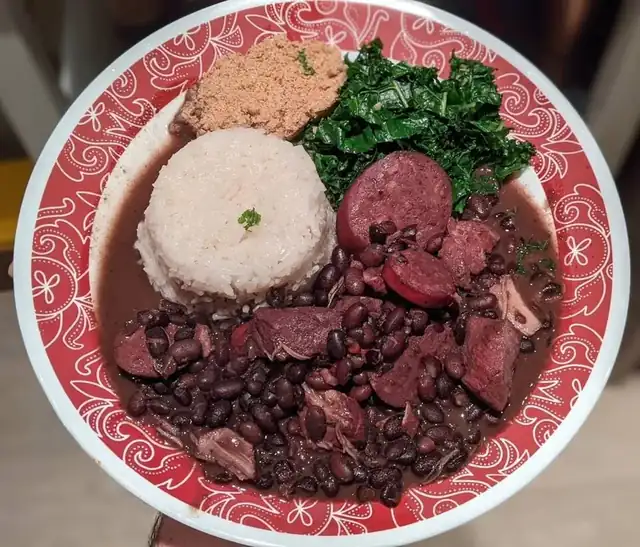
A Taste of Brazil: Many Influences, Many Ways to Eat