The dish is a starting point for exploring a wider food story. The guide below looks more closely at its background and different forms. When you want to cook, visit the recipe collection for ingredient quantities and step-by-step methods.
In this story
OverviewGeographical range and variantsIngredients and preparationJollof warsCameroonThe GambiaGhanaRelated dishesOverview
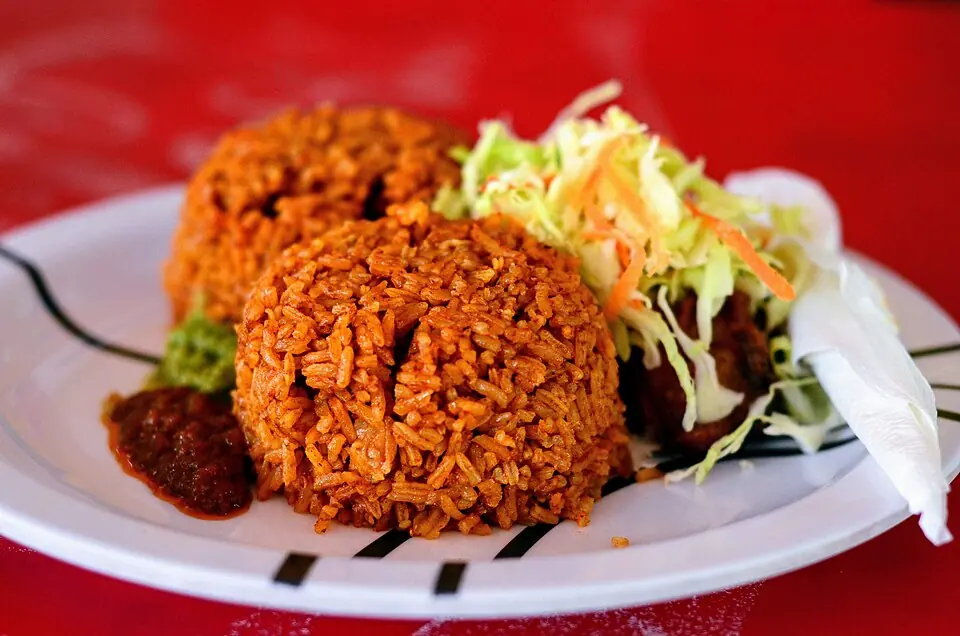
Jollof , or jollof rice, is a rice dish from Senegal, West Africa. It is typically made with long-grain rice, tomatoes, chilis, onions, spices, and sometimes other vegetables and/or meat in a single pot, although its ingredients and preparation methods vary across different regions.
Regional variations are a source of competition among the countries of West Africa, and in particular between Nigeria and Ghana. In the 2010s this developed into a friendly rivalry known as the "Jollof wars".
In French-speaking West Africa, a variation of the dish is known as riz au gras. The Senegalese version, thieboudienne, has been recognized by UNESCO as an intangible cultural heritage dish.
Geographical range and variants
Jollof rice is one of the most common dishes in West Africa. There are several regional variations in name and ingredients; for example, in Mali it is called zaamè in Bamanankan. The dish's most common name of jollof derives from the name of the Wolof people, though in Senegal, Mauritania and The Gambia the dish is referred to in Wolof as ceebu jën or benachin. In French-speaking areas, it is called riz au gras. Despite the variations, the dish is "mutually intelligible" across the regions and has become the best known African dish outside the continent. It is found throughout the world wherever communities of West African immigrants have developed.
Ingredients and preparation
Jollof rice traditionally consists of rice, cooking oil, tomato puree, onion, salt, chilies, and often some combination of other ingredients such as tomato paste, bell pepper, garlic, ginger, thyme, curry powder, bay leaves, grains of selim, and bouillon cubes or stock; recipes vary from country to country and cook to cook. Chicken, turkey, beef, lamb or fish are often cooked with or served with the dish. In some countries, other vegetables such as cabbage, green peas, or carrots are included.
Some recipes call for long grain rice, some for short grain, some for broken rice, others for parboiled rice. Typically the tomato puree, tomato paste, onions, salt and chillies are sauteed in oil and simmered into a sauce in which the rice is then cooked.
Jollof wars
West African countries typically have at least one variant form of the dish, with Ghana, Nigeria, Sierra Leone, Liberia and Cameroon particularly competitive as to which country makes the best jollof. In the mid-2010s this expanded into the "Jollof Wars".
The gastronationalism rivalry is especially prominent between Nigeria and Ghana, and has led to various events, including cooking competitions and social media campaigns, fostering cultural pride. In 2016, Sister Deborah released the song "Ghana Jollof", which denigrated the Nigerian version and Nigerians for being proud of their version. Soon after, a physical fight over insufficient jollof supplies at a Ghanaian political rally sparked delighted mocking of Ghanaians by Nigerians.
Of particular sensitivity in jollof-making communities is the inclusion of non-traditional ingredients, which are defined country to country and are seen as making the jollof inauthentic. In 2014, a recipe released by Jamie Oliver that included cherry tomatoes, coriander, lemon, and parsley, none of which are used in any traditional recipe, caused outraged reactions, including the hashtag #jollofgate trending on social media, to the point Oliver's team chose to issue a statement.
Cameroon
The Cameroonian version, sometimes called fried rice, often includes red peppers, carrots, green beans and smoked paprika.
The Gambia
Smoked snails are a traditional ingredient in Gambian cuisine.
Ghana
Ghanaian jollof rice is made of vegetable oil, onion, ginger, pressed garlic cloves, chillies, tomato paste, beef or goat meat or chicken (sometimes alternated with mixed vegetables), local or refined rice, typically jasmine rice and black pepper. Ghanaian jollof typically does not include any green leafy vegetables.
The method of cooking Ghanaian jollof begins with first preparing the beef or chicken by seasoning and steaming it with a pureé of ginger, onions and garlic and frying it until it is well-cooked. The rest of the ingredients are then fried all together, starting from onions, pepper, tomato paste, tomatoes and spices in that order. After all the ingredients have been fried, rice is then added and cooked until the meal is prepared. Ghanaian jollof is typically served with plantains and side dishes of beef, chicken, well-seasoned fried fish, or mixed vegetables.
Jollof in Ghana is often served alongside shito (a popular type of pepper sauce which originates from Ghana) and salad during parties and other ceremonies.
Related dishes
Some areas also have versions of two related dishes:
Party jollof or party rice is traditionally cooked outdoors over a wood fire, which gives it a smoky flavor and a crusty "bottom pot" similar to tahdig or socarrat, it is prepared with fresh tomato and pepper mix, tomato paste, onions, vegetable oil, spices like thyme, rosemary, curry, meat stock, etc.
Native rice, also called concoction rice, uses red palm oil and smoked, dried fish and is seasoned with locust beans (also known as iru or dawa-dawa), uziza seeds and/or scent leaf, (respectively known as nchuanwu, arimu and ahuji in Igbo; ntong in Efik-Ibibio; efirin in Yoruba, añyeba in Igala, aramogbo in Edo; etc.), occasionally sprinkled with cut olili (local mint). Concoction rice is a term that may refer to either this or an 'economically-friendly' version of either this or conventional jollof rice but in the latter, too, red palm oil (or groundnut oil) is more frequently used to cook it than vegetable oils.
More to savor

Koko da Kosai (Fermented Corn Porridge and Bean Fritters)
Sylheti Rice Pudding
Fufu: A Starchy Staple with Many Regional Forms