This longer reference provides the background behind the topic. Read it alongside the recipe collection when you want to connect an ingredient or food idea with a dish to prepare.
Overview
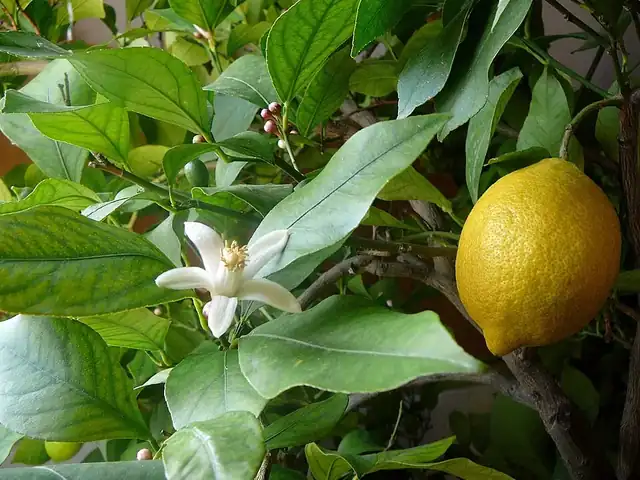
The lemon (Citrus × limon) is a species of small evergreen tree in the Citrus genus of the flowering plant family Rutaceae. A true lemon is a hybrid of the citron and the bitter orange. Its origins are uncertain, but some evidence suggests lemons originated during the 1st millennium BC in what is now northeastern India. Some other citrus fruits are called lemon.
The yellow fruit of the lemon tree is used throughout the world, primarily for its juice. The pulp and rind are used in cooking and baking. The juice of the lemon is about 5–6% citric acid, giving it a sour taste. This makes it a key ingredient in drinks and foods such as lemonade and lemon meringue pie.
In 2024, world production was 23 million tonnes, led by India and Mexico with 31% of the total.
Description
The lemon tree produces a pointed oval yellow fruit. Botanically this is a hesperidium, a modified berry with a tough, leathery rind. The rind is divided into an outer colored layer or zest, which is aromatic with essential oils, and an inner layer of white spongy pith. Inside are multiple carpels arranged as radial segments. The seeds develop inside the carpels. The space inside each segment is a locule filled with juice vesicles.
Lemons contain many phytochemicals, including polyphenols, terpenes, and tannins. Their juice contains slightly more citric acid than lime juice (about 47 g/L), nearly twice as much as grapefruit juice, and about five times as much as orange juice.
Growing and pruning
Lemons need a minimum temperature of around 7 C, so they are not hardy year-round in temperate climates, but become hardier as they mature. Citrus require minimal pruning by trimming overcrowded branches, with the tallest branch cut back to encourage bushy growth. Throughout summer, pinching back tips of the most vigorous growth assures more abundant canopy development. As mature plants may produce unwanted, fast-growing shoots (called "water shoots"), these are removed from the main branches at the bottom or middle of the plant. There is reputed merit in the tradition of urinating near a lemon tree.
In cultivation in the UK, the cultivars "Meyer" and "Variegata" have gained the Royal Horticultural Society's Award of Garden Merit (confirmed 2017).
Production
In 2024, world production of lemons (together with limes for reporting) was 23 million tonnes, led by India and Mexico with 31% of the total when combined (table). China and Argentina were secondary producers.
Varieties
The 'Bonnie Brae' is oblong, smooth, thin-skinned, and seedless. These are mostly grown in San Diego County, California, United States.
The 'Eureka' grows year-round and abundantly. This is the common supermarket lemon, also known as "Four Seasons" (Quatre Saisons) because of its ability to produce fruit and flowers together throughout the year. The variety developed in California in the 19th Century from specimens brought to California during the Gold Rush by immigrants from Naples and Sicily. This variety is also available as a plant for domestic customers. There is also a pink-fleshed Eureka lemon with a green and yellow variegated outer skin.
The Lisbon lemon is very similar to the Eureka and is the other common supermarket lemon. It is smoother than the Eureka, has thinner skin, and has fewer or no seeds. It generally produces more juice than the Eureka and was brought to California by Portuguese immigrants.
The 'Femminello St. Teresa', or 'Sorrento' originates in Italy. This fruit's zest is high in lemon oils. It is the variety traditionally used in the making of limoncello.
The 'Yen Ben' is an Australasian cultivar.
Culinary
Lemon juice and rind are used in a wide variety of foods and drinks, the juice for its sour taste, from its content of 5–6% citric acid. The whole lemon is used to make marmalade, lemon curd and lemon liqueurs such as Limoncello. Lemon slices and lemon rind are used as a garnish for food and drinks. Lemon zest, the grated outer rind of the fruit, is used to add flavor to baked goods. The juice is used to make lemonade and some cocktails.
It is used in marinades for fish, where its acid neutralizes amines in fish. In meat, the acid partially hydrolyzes tough collagen fibers, tenderizing it. In the United Kingdom, lemon juice is frequently added to pancakes eaten to celebrate Shrove Tuesday. Lemon juice is used as a short-term preservative on certain foods that tend to oxidize and turn brown after being sliced (enzymatic browning), such as apples, bananas, and avocados: its acidity suppresses oxidation by polyphenol oxidase enzymes.
Lemon peel is used in the manufacture of pectin, a gelling agent and stabilizer in food and other products. In Mediterranean countries including Morocco, lemons are preserved in jars or barrels of salt. The salt penetrates the peel and rind, softening them, and curing them so that they last almost indefinitely.
Lemon oil is extracted from oil-containing cells in the skin. A machine breaks up the cells and uses a water spray to flush off the oil. The oil–water mixture is then filtered and separated by centrifugation.
The leaves of the lemon tree are used to make a tea and for preparing cooked meats and seafoods.
Other uses
Lemons were the primary commercial source of citric acid before the development of fermentation-based processes.
Lemon oil is used in aromatherapy. Lemon oil aroma does not influence the human immune system, but may contribute to relaxation.
An educational science experiment involves attaching electrodes to a lemon and using it as a battery to produce electricity. Although very low power, several lemon batteries can power a small digital watch.
Lemon juice forms a simple invisible ink, developed by heat.
Lemon juice is sometimes used to increase the blonde color of hair, acting as a natural highlight after the moistened hair is exposed to sunlight.
More to savor

Chicken Vindaloo

Samosa
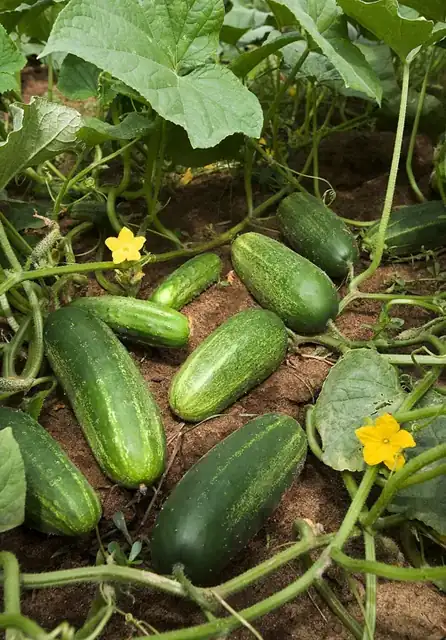
Cucumber in the Kitchen: Exploring an Everyday Ingredient