Use the regional background below as a starting point for exploring the food, rather than expecting one dish to represent every household. Food traditions differ within a country and continue to change through travel, migration, and everyday cooking.
In this story
OverviewHome cookingFood and festivalsStreet foodBeveragesDessertsMexican food outside MexicoOverview
Mexican cuisine consists of the food traditions of Mexico. Its earliest roots lie in Mesoamerican cuisine. Mexican cuisine's ingredients and methods arise from the area's first agricultural communities, such as those of the Olmec and Maya, who domesticated maize, created the standard process of nixtamalization, and established foodways. Successive waves of other Mesoamerican groups brought with them their cooking methods. These included the Teotihuacanos, Toltec, Huastec, Zapotec, Mixtec, Otomi, Purépecha, Totonac, Mazatec, Mazahua, and Nahua. With the Mexica formation of the multi-ethnic Triple Alliance (Aztec Empire), culinary foodways became infused (Aztec cuisine).
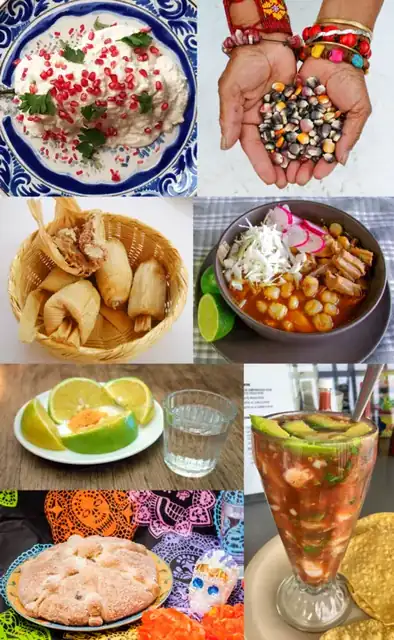
Today's food staples native to the land include corn (maize), turkey, beans, squash, amaranth, chia, avocados, tomatoes, tomatillos, cacao, vanilla, agave, spirulina, sweet potato, cactus, and chili pepper. Its history over the centuries has resulted in regional cuisines based on local conditions, including Baja Med, Chiapas, Veracruz, Oaxacan, Lebanese Mexican and the American cuisines of New Mexican and Tex-Mex.
Home cooking
In most of Mexico, especially in rural areas, food is commonly eaten at home.
The typical Mexican household has four meals throughout the day: a light breakfast, commonly including coffee/atole (maize drink), and a light meal around 11 a.m., which includes a snack and drink. These are followed by "comida" (as opposed to "almuerzo"), between noon and 2 p.m. This is usually the heaviest meal of the day. It sometimes begins with soup, often chicken broth with pasta or a "dry soup", which is pasta or rice flavored with onions, garlic or vegetables. The main course is meat served in a cooked sauce with salsa on the side, accompanied with beans and tortillas and often with a fruit drink in some areas. The last meal of the day is supper, which varies greatly by region, and is usually eaten between 6 p.m. and 9 p.m.
Food and festivals
Mexican cuisine is elaborate and often tied to symbolism and festivals, which is one reason it was named as an example of the Intangible Cultural Heritage of Humanity by UNESCO. Many of the foods of Mexico are complicated because of their relation to the social structure of the country. Food preparation, especially for family and social events, is considered to be an investment in order to maintain social relationships. Even the idea of flavor is considered to be social, with meals prepared for certain dinners and certain occasions when they are considered the most tasty.
The ability to cook well, called "sazón" (lit. seasoning) is considered to be a gift generally gained from experience and a sense of commitment to the diners. For the Day of the Dead festival, foods such as tamales and mole are set out on altars and it is believed that the visiting dead relatives eat the essence of the food. If eaten afterwards by the living it is considered to be tasteless. In central Mexico, the main festival foods are mole, barbacoa, carnitas and mixiotes. They are often prepared to feed hundreds of guests, requiring groups of cooks. The cooking is part of the social custom meant to bind families and communities.
Mexican regional home cooking is completely different from the food served in most Mexican restaurants outside Mexico, which is usually some variety of Tex-Mex. The original versions of Mexican dishes are vastly different from their Tex-Mex variation.
Street food
Mexican street food can include tacos, quesadillas, pambazos, tamales, huaraches, alambres, al pastor, and food not suitable to cook at home, including barbacoa, carnitas, and since many homes in Mexico do not make use of ovens, roasted chicken. One attraction of street food in Mexico is the satisfaction of hunger or craving without all the social and emotional connotation of eating at home, although longtime customers can have something of a friendship/familial relationship with a chosen vendor.
Tacos are the top-rated and most well-known street Mexican food. It is made up of meat or other fillings wrapped in a tortilla often served with cheese added. Vegetarian fillings include mushrooms, potatoes, rice, or beans.
Beverages
Corn in Mexico is not only eaten, but also drunk as a beverage. Corn is the base of a hot drink called atole, which is then flavored with fruit, chocolate, rice or other flavors. Fermented corn is the base of a cold drink, which goes by different names and varieties, such as tejuino, pozol and others. Aguas frescas are flavored drinks usually made from fruit, water and sugar. Beverages also include hibiscus iced tea, one made from tamarind and one from rice called horchata. One variant of coffee is café de olla, which is coffee brewed with cinnamon and raw sugar. Many of the most popular beverages can be found sold by street vendors and juice bars in Mexico.
Chocolate played an important part in the history of Mexican cuisine. The word "chocolate" originated from Mexico's Aztec cuisine, derived from the Nahuatl word xocolatl. Chocolate was first drunk rather than eaten. It was also used for religious rituals. The Maya civilization grew cacao trees and used the cacao seeds it produced to make a frothy, bitter drink. The drink, called xocoatl, was often flavored with vanilla, chile pepper, and achiote. Tejate is another Mexican beverage made from cacao. Coffee is also popular in Mexico; Café de olla is a traditional preparation of coffee with cinnamon and piloncillo.
Desserts
Dessert culture in Mexico did not develop until after the introduction of Spanish customs to the area. There were foods which could be considered desserts by modern standards like chocolate, but they were consumed and used differently. With the introduction of Europeans and their food and culture to the region came sugar and with it, sweets. The range of desserts evolved and grew over time to include everything from churros to rice pudding, from cakes to fruit treats. Some of the desserts which historically are made in Mexico are fairly easy to make and can be produced in high quantity.
Mexican food outside Mexico
Mexican cuisine is offered in a few fine restaurants in Europe and the United States. Sometimes landrace corn from Mexico is imported and ground on the premises.
More to savor

English Breakfast
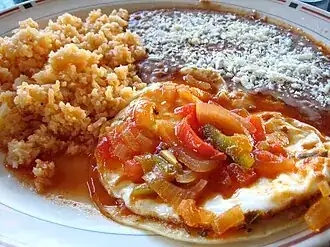
Huevos Rancheros
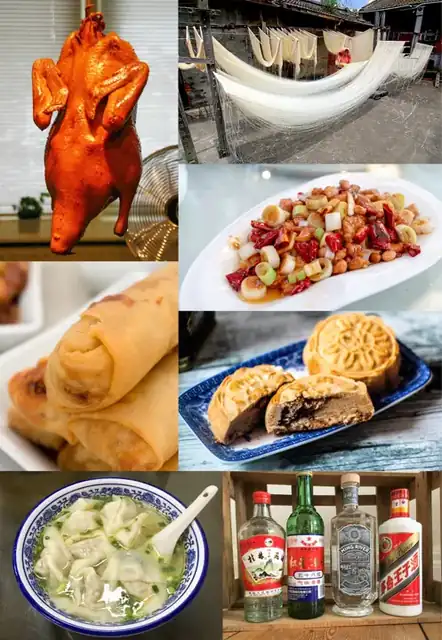
Beyond One Menu: Exploring China's Many Food Traditions