Use the regional background below as a starting point for exploring the food, rather than expecting one dish to represent every household. Food traditions differ within a country and continue to change through travel, migration, and everyday cooking.
Overview
Nigerian cuisine consists of dishes or food items from the hundreds of Native African ethnic groups that comprise Nigeria. Like other West African cuisines, it uses spices and herbs with palm oil or groundnut oil to create deeply flavored sauces and soups.
Nigerian feasts can be colourful and lavish, while aromatic market and roadside snacks cooked on barbecues or fried in oil are in abundance and varied.
Tropical fruits such as watermelon, pineapple, coconut, banana, orange, papaya and mango are mostly consumed in Nigeria.
Nigerian cuisine, like many West African cuisines, is known for being savoury and spicy.
Rice-based
Coconut rice is rice made with coconut milk, and other spices.
Jollof rice is a rice dish made with pureed tomato and Scotch bonnet-based sauce.
Ofada rice is a South West Nigerian rice variety. It is eaten with ayamase or ofada sauce.
Fried rice is a rich dish made with mixed vegetables (cabbage, carrots, green peas), meat, poultry or prawns.
Pate is made with ground dry corn, rice or acha. Mostly combined with vegetables (spinach), tomatoes, onions, peppers, garden eggs (eggplants), locust beans, groundnuts, biscuit bones and minced meat are common in northwestern Nigeria, like Kano, Kaduna, Nassarawa and Plateau.
Tuwo masara is a corn-flour dish eaten in Northern Nigeria.
Tuwo shinkafa, thick rice pudding usually eaten with miyan kuka (a thick soup) and goat meat stew or miyan taushe, a pumpkin stew made with spinach, meat (usually goat or mutton) and smoked fish. It is primarily served in the northern part of the country.
Meat
Meat is used in most Nigerian dishes.
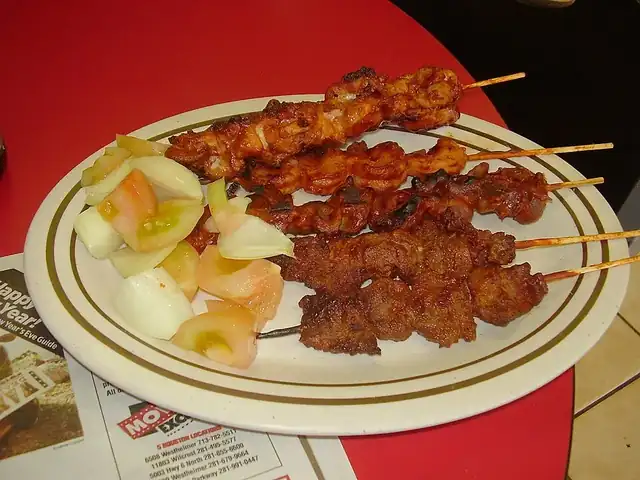
Suya, from the north of Nigeria, is a grilled meat coated with ground chili pepper, peanut powder, and other local spices. It is prepared barbecue-style using a skewer. This is one of the most famous Nigerian specialties and can be found within easy reach all over the country.
Tsire refers specifically to meat which has a generous coating of peanut/chili powder. The meat may or may not be on a skewer.
Kilishi is similar to beef jerky. It is made from meat that has been cut into very thin slices, which are then spread out to dry. A preparation of chili pepper, spices and local herbs is then prepared into a paste which is lightly brushed on both sides. This is then briefly grilled.
Balangu refers to meat that has been grilled over a wood or coal fire. The meat is typically cooked in brown paper. Specifically, no seasoning is applied to bring out the natural flavour of the particular type of meat which may be goat, mutton or beef. Salt and spices can be added later according to taste.
Dambu nama is a meat floss from Northern Nigeria.
Soups and stews
Egusi soup is prepared from thickened ground melon seeds. It contains leafy vegetables, seasonings, and meat. It is often eaten with dishes like amala, pounded yam, fufu, and eba.
Banga soup is made from palm nuts and is eaten primarily in the south and mid-western parts of Nigeria. It is also known as atama soup by the Cross River and Akwa Ibom indigenes. This soup is usually made through extracting the juice from the palm nuts. It is usually served with any kind of swallow (garri, semo and pounded yam).
Ofe akwu is also made from palm nuts, but prepared more like a stew meant to be eaten with rice and it is native to the Igbo people.
Miyan kuka, very common among the Hausa people, is made from powdered baobab leaves and dried okra.
Miyan yakuwa is a Hausa soup.
Ewedu soup is popular amongst the Yoruba people of south-western Nigeria. Ewedu soup is usually prepared with jute leaves and cooked by pureeing the leaves with a blender or special broom.
Side dishes
Dodo is a side dish of plantains fried in vegetable or palm oil, preferably ripe plantain.
Gizdodo is a combination of fried dodo and grilled gizzard.
Peppered gizzard, pomo (Yoruba word for cow skin), shaki (Yoruba word for tripe)
Funkaso, millet pancakes
Mosa, fermented corn ground into a thick paste, fried then sprinkled with sugar. It is an acquired taste. An alternative form made from very soft plantain, mashed into a paste, mixed with dried black pepper, fried, then sprinkled with sugar.
Abacha, a dish originating from South-eastern Nigeria.
Breakfast
Masa (Nigerian food) originated from the north and is eaten both as lunch and breakfast. Rice is soaked and then ground. Yogurt is added, forming a thick paste, and left to ferment, or yeast and sugar is added to taste. Poured into clay forms and heated from below, a spatula is used to flip over and gouge the masa out of the form. It is traditionally served with miyan taushe (pumpkin stew) or honey.
Sinasir is a flat masa, made by simply pouring the prepared rice paste into a frying pan, thus avoiding the need to flip it over as would be necessary with masa. This is a predominantly Hausa food.
Alkubus is Hausa-Fulani steamed bread made from wheat, flour, yeast and water, put in moulds and steamed. It is served with miyan taushe.
Yam with red stew or scrambled eggs with diced tomato and onion.
Eko also known as agidi by the Yoruba speaking people of Southwest, is a popular breakfast meal in Nigeria. It is served in combination with other foods such as Akara (fried bean cake), beans, pepper soup, and other soups.
Ogi or akamu is corn pudding common in Nigeria, called ogi by the Yoruba and akamu by the Igbo. Eaten with bread, akara or beans
Beverages
Kunu is a well-known drink made of either millet, sorghum or maize.
Fura is a common drink, especially across northern Nigeria, made of cooked, then pounded, millet or sorghum with a little cow's milk.
Palm wine, which may be distilled into ogogoro
Zobo (hibiscus leaf) is a drink made of roselle juice (the Yorubas call the white variety isapa)
Soya bean milk is a drink made from soaked, ground, and sieved soya bean.
Shayi (masala chai) is a spiced black tea more popular in northern Nigeria. The introduction of this tea is typically attributed to the Kanuri, Tuareg and Shuwa Arab ethnic groups. The word 'shayi' comes from the Hausa language and means 'tea'.
More to savor
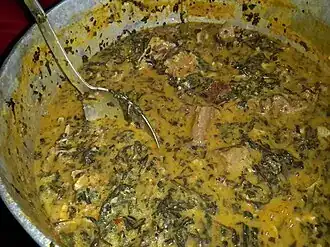
Ofe Onugbu (Bitter Leaf Soup)
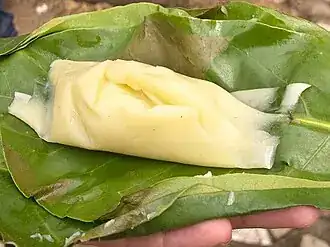
Agidi (Nigerian Cornstarch Swallow)
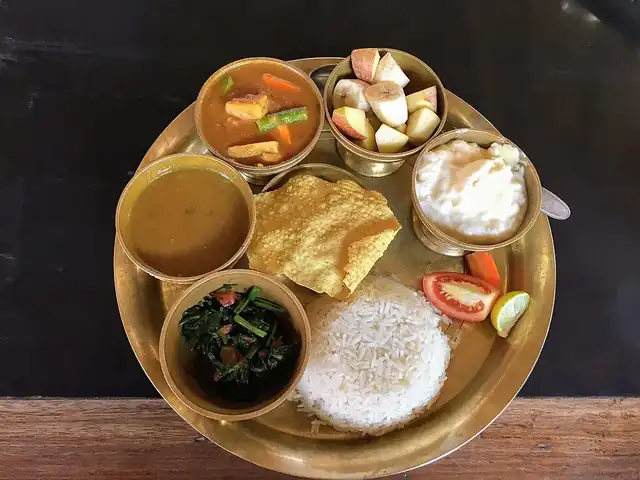
A Taste of Nepal: Food Across Regions and Communities