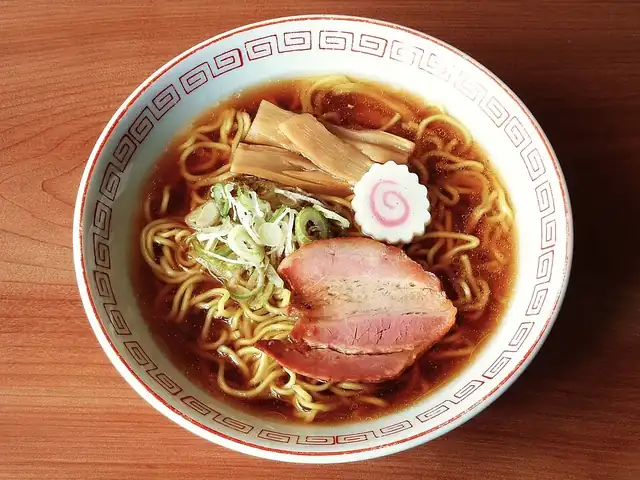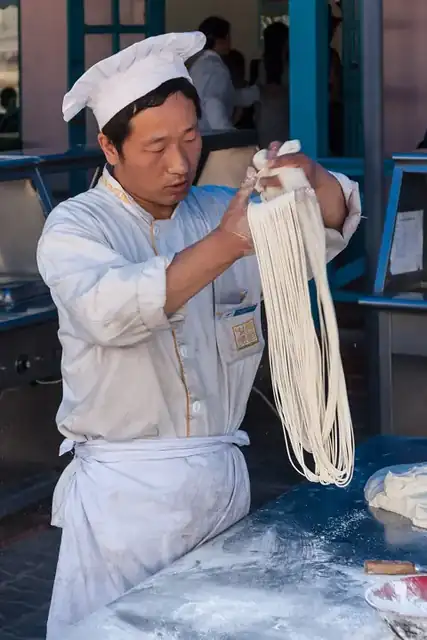
The dish is a starting point for exploring a wider food story. The guide below looks more closely at its background and different forms. When you want to cook, visit the recipe collection for ingredient quantities and step-by-step methods.
Overview
Noodles are a type of food typically made from unleavened dough which is rolled flat and cut, stretched, or extruded into long strips or strings. Noodles are a staple food in many cultures and made into a variety of shapes. The most common noodles are those derived from Chinese cuisine or Italian cuisine. Italian noodles are generally referred to as pasta. In Chinese cuisine, the overarching term for noodles is 麵 (miàn in Mandarin), which refers specifically to dough-based noodles made from wheat or other grain-based dough. Chinese noodles also include another category, called 粉 (fěn), which are not made by kneading dough but from a starch slurry, such as rice noodles (mǐfěn, 米粉), and cellophane noodles (fěnsī, 粉丝 / 粉絲). These are not made from wheat dough, but are still regarded as noodles in English due to their physical form and culinary role.
While long, thin strips may be the most common, many varieties of noodles are cut into waves, helices, tubes, strings, or shells, or folded over, or cut into other shapes. Noodles are usually cooked in boiling water, sometimes with cooking oil or salt added. They can also be steamed, pan-fried, deep-fried, or baked. Noodles are often served with an accompanying sauce or in a soup, the latter being known as noodle soup. Noodles can be refrigerated for short-term storage or dried and stored for future use.
East Asia
There are over 1,200 types of noodles commonly consumed in China today. They vary widely according to the region of production, ingredients, shape or width, and manner of preparation. Due to the vast diversity of Chinese noodles, there is no single Chinese word equivalent to the Western concept of "noodles," nor is the notion of "noodles" as a unified food category recognized within Chinese cuisine.
In Standard Mandarin, miàn (simplified Chinese: 面; traditional Chinese: 麵) means "dough" but can be used to refer to noodles made from wheat flour and grains such as millet, sorghum, and oats. Similarly, fěn (粉) means "powder" but can be used to refer to noodles made from other starches, particularly rice flour and mung bean starch.
Wheat noodles in Japan (udon) were adapted from a Chinese recipe as early as the 9th century. Innovations continued, such as noodles made with buckwheat (naengmyeon) were developed in the Joseon Dynasty of Korea (1392–1897). Ramen noodles, based on southern Chinese noodle dishes from Guangzhou but named after the northern Chinese lamian, became common in Japan after World War II.
Central Asia
Kesme or erişte noodles were eaten by Turkic peoples by the 13th century.
West Asia
Ash reshteh (noodles in thick soup with herbs) is one of the most popular dishes in some middle eastern countries such as Iran.
The Latinized word itrium referred to a kind of boiled dough. Arabs adapted noodles for long journeys in the fifth century, the first written record of dry pasta. Muhammad al-Idrisi wrote in 1154 that itriyya was manufactured and exported from Norman Sicily. Itriyya was also known by the Persian Jews during early Persian rule (when they spoke Aramaic) and during Islamic rule. It referred to a small soup noodle, of Greek origin, prepared by twisting bits of kneaded dough into shape, resembling Italian orzo.
Europe
In the 1st century BCE, Horace wrote of fried sheets of dough called lagana. However, the cooking method does not correspond to the current definition of either a fresh or dry pasta product.
Italy
Some Italian writers argued that pasta in Italy dates back to fourth century BC in the Etruscan civilization. However modern historians dispute this claim and believe the first noodles were imported much later from the Arabs during the Middle Ages. Jeffrey Steingarten asserts that Moors had introduced pasta in the Emirate of Sicily in the 9th century. Historian Gil Marks documented in Encyclopedia of Jewish Food that pasta had subsequently spread from Sicily to mainland Italy sometime after the tenth century. Likewise, food historians Françoise Sabban and Massimo Montanari noted in Pasta: The Story of a Universal Food that the first noodles to appear in Italy occurred in the 10th or 11th centuries.
There is a legend about Marco Polo bringing the first pasta back from China however this is considered a myth by many historians. By the time Marco Polo has traveled to China during the Yuan dynasty in the late 13th century, pasta-like foods had already been well established in Italy.
Rice
Bánh phở, thick fresh rice noodle used in popular Vietnamese phở noodles soup
Flat or thick rice noodles, also known as hé fěn or ho fun (河粉), kway teow (粿條) or sen yai (เส้นใหญ่)
Rice vermicelli: thin rice noodles, also known as mǐfěn (米粉) or bee hoon or sen mee (เส้นหมี่) or "bún"
Sevai, a variant of rice vermicelli common in South India
Idiyappam is an Indian rice noodle
Mixian and migan noodles of southwest China
Khanom chin is a fermented rice noodle used in Thai cuisine
Types of dishes
Baked noodles: Boiled and drained noodles are combined with other ingredients and baked. Common examples include many casseroles.
Basic noodles: These are cooked in water or broth, then drained. Other foods can be added or the noodles are added to other foods (see fried noodles) or the noodles can be served plain with a dipping sauce or oil to be added at the table. In general, noodles are soft and absorb flavors.
Chilled noodles: noodles that are served cold, sometimes in a salad. Examples include Thai glass noodle salad and cold udon.
Fried noodles: dishes made of noodles stir fried with various meats, seafood, vegetables, and dairy products. Examples include chow mein, lo mein, mie goreng, hokkien mee, some varieties of pancit, yakisoba, tallarín saltado, and pad thai.
Noodle soup: noodles served in broth. Examples include phở, beef noodle soup, chicken noodle soup, ramen, laksa, mie ayam, saimin, and batchoy.
More to savor
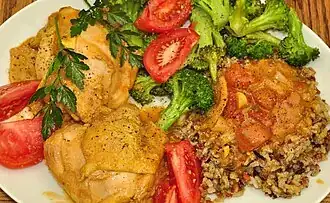
Coconut Chicken

English Breakfast
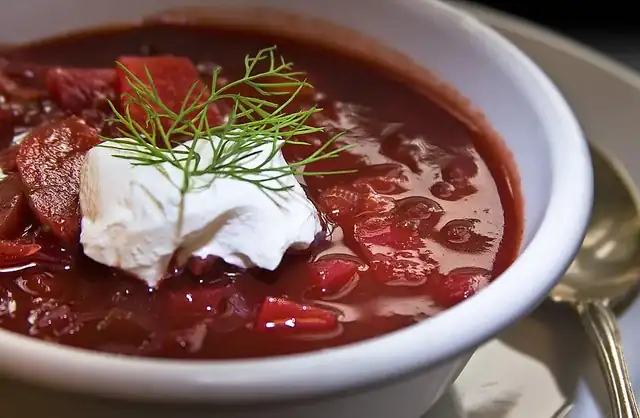
Borscht: The Soup with More Than One Color and Story