This longer reference provides the background behind the topic. Read it alongside the recipe collection when you want to connect an ingredient or food idea with a dish to prepare.
Overview
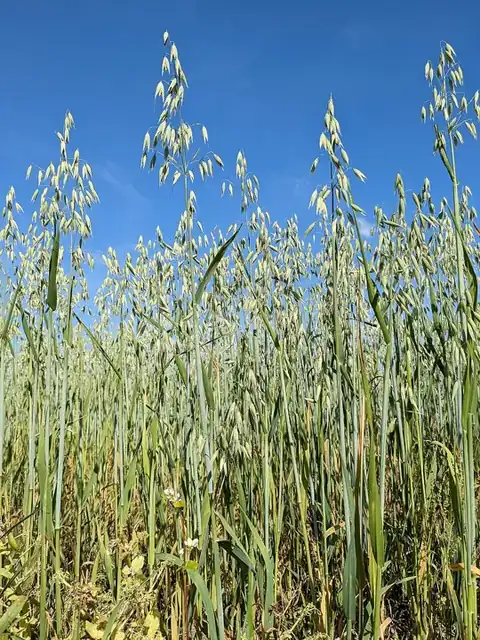
The oat (Avena sativa), sometimes called the common oat, is a species of cereal grass (Avena) grown for fodder and for its seed, which is known by the same name (usually in the plural). Oats appear to have been domesticated as a secondary crop, as their seeds resembled those of other cereals closely enough for them to be included by early cultivators. Oats tolerate cold winters less well than cereals such as wheat, barley, and rye, but need less summer heat and more rain, making them important in areas such as Northwest Europe that have cool, wet summers. They can tolerate low-nutrient and acid soils. Oats grow thickly and vigorously, allowing them to outcompete many weeds, and compared to other cereals are relatively free from diseases.
Oats are used for human consumption as oatmeal, including as steel cut oats or rolled oats. Global production is dominated by Canada and Russia; global trade is a small part of production, most of the grain being consumed within the producing countries. Oats are a nutrient-rich food associated with lower blood cholesterol and reduced risk of human heart disease when consumed regularly. One of the most common uses of oats is as livestock feed; the crop can also be grown as groundcover and ploughed in as a green manure.
Description
The oat is a tall stout grass, a member of the family Poaceae; it can grow to a height of 1.8 m. The leaves are long, narrow, and pointed, and grow upwards; they can be some 15 to 40 cm in length, and around 5 to 15 mm in width. Leaf blades emerge first from nodes in the stalk, then the sheath. New leaves grow upwards on nodes further from the ground, leaves on the old nodes gradually brown and wilt. Roots are fibrous, mostly in the uppermost 0.3 m of the soil (though some may penetrate as deep as 1.5 m, and develop from a crown at the soil surface. When seeds are dense, they make only one or two hollow stems (culms), but when spaced out may make 10 to 30 culms.
At the top of the stem, the plant branches into a loose cluster or panicle of about 10-75 spikelets. While they tend to self pollinate, 1-2% may outcross. There are 7-9 nodes, with one leaf at each node and hollow internodes. These contain the wind-pollinated flowers, which mature into the oat seeds or grains. Botanically the grain is a caryopsis, as the wall of the fruit is fused on to the actual seed. Like other cereal grains, the caryopsis contains the outer husk or bran, the starchy food store or endosperm which occupies most of the seed, and the protein-rich germ which if planted in soil can grow into a new plant.
Phylogeny
Phylogenetic analysis using molecular DNA and morphological evidence places the oat genus Avena in the Pooideae subfamily. That subfamily includes the cereals wheat, barley, and rye; they are in the Triticeae tribe, while Avena is in the Poeae, along with grasses such as Briza and Agrostis. The wild ancestor of Avena sativa and the closely related minor crop – A. byzantina – is A. sterilis, a naturally hexaploid wild oat, one that has its DNA in six sets of chromosomes. Genetic evidence shows that the ancestral forms of A. sterilis grew in the Fertile Crescent of the Near East.
Analysis of maternal lineages of 25 Avena species using chloroplast and mitochondrial DNA showed that A. sativa hexaploid genome derives from three diploid oat species (each with two sets of chromosomes); the sets are dubbed A, B, C, and D. The diploid species are the CC A. ventricosa, the AA A. canariensis, and the AA A. longiglumis, along with two tetraploid oats (each with four sets), namely the AACC A. insularis and the AABB A. agadiriana. Tetraploids were formed as much as 10.6 mya, and hexaploids as much as 7.4 mya. Crosses among tetraploid or hexaploid species are fully fertile, but diploid species vary in how they interbreed. Crosses among species with different ploidy may be sterile or partially fertile.
Domestication
Genomic study suggests that the hulled variety and the naked variety A. sativa var. nuda diverged around 51,200 years ago, long before domestication. This implies that the two varieties were domesticated independently.
Oats are thought to have emerged as a secondary crop. This means that they are derived from what was considered a weed of the primary cereal domesticates such as wheat. They survived as a Vavilovian mimic by having grains that Neolithic people found hard to distinguish from the primary crop.
Processing
Harvested oats go through multiple stages of milling. The first stage is cleaning, to remove seeds of other plants, stones and any other extraneous materials. Next is dehulling to remove the indigestible bran, leaving the seed or "groat". Heating denatures enzymes in the seed that would make it go sour or rancid; the grain is then dried to minimise the risk of spoilage by bacteria and fungi. There may follow numerous stages of cutting or grinding the grain, depending on which sort of product is required. For oatmeal (oat flour), the grain is ground to a specified fineness. For home use such as making porridge, oats are often rolled flat to make them quicker to cook.
Production
In 2024, world production of oats was 22 million tonnes, led by Canada with 15% of the total and Russia with 13% (table).
As food
When used in foods, oats are most commonly rolled or crushed into oatmeal or ground into fine oat flour. Oatmeal is chiefly eaten as porridge, but may also be used in a variety of baked goods, such as oatcakes (which may be made with coarse steel-cut oats for a rougher texture), oatmeal cookies and oat bread. Oats are an ingredient in many cold cereals, in particular muesli and granola; the Quaker Oats Company introduced instant oatmeal in 1966. Oats are also used to produce milk substitutes ("oat milk"). As of 2020 the oat milk market became the second-largest among plant milks in the United States, following almond milk, but exceeding the sales of soy milk.
As a mainstay of West Wales for centuries, until changes in farming practices in the 1960s, oats were used in many traditional Welsh dishes, including laverbread, a Welsh breakfast, and "cockles and eggs" served with oatbread. Oat noodles have traditionally been eaten in Shanxi, China.
More to savor
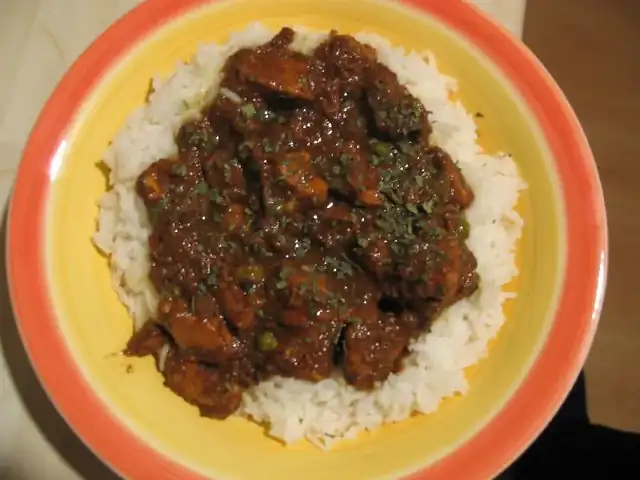
Chicken Vindaloo
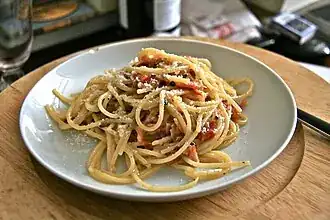
Spaghetti alla Carbonara
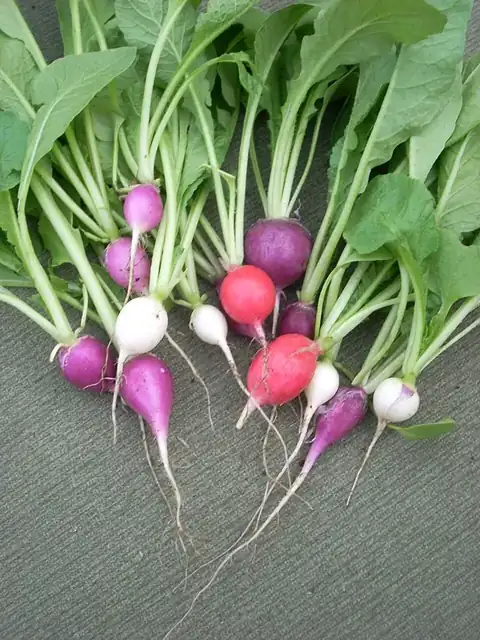
A Closer Look at Radish: From Ingredient to Meal