This longer reference provides the background behind the topic. Read it alongside the recipe collection when you want to connect an ingredient or food idea with a dish to prepare.
Overview
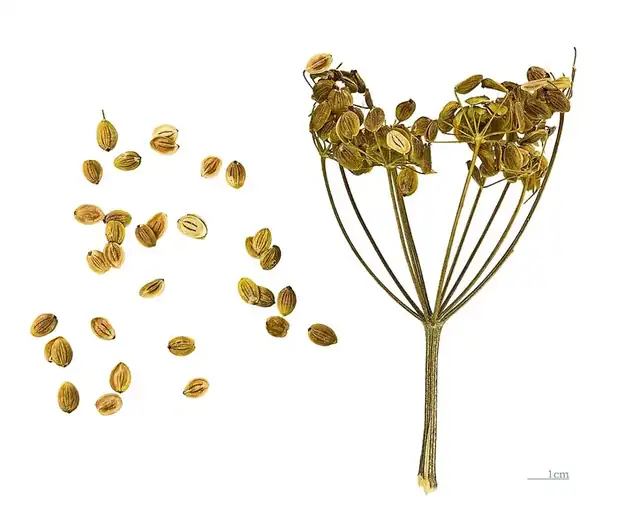
The parsnip (Pastinaca sativa) is a root vegetable closely related to carrot and parsley, all belonging to the flowering plant family Apiaceae. It is a biennial plant usually grown as an annual. Its long taproot has light cream colored skin and flesh, and, left in the ground to mature, becomes sweeter in flavor after winter frosts. In its first growing season, the plant has a rosette of pinnate, mid-green leaves. If unharvested, it produces a flowering stem topped by an umbel of small yellow flowers in its second growing season, later producing pale brown, flat, winged seeds. By this time, the stem has become woody, and the taproot inedible.
The parsnip is native to Eurasia; it has been used as a vegetable since antiquity and was cultivated by the Romans, although some confusion exists between parsnips and carrots in the literature of the time. It was used as a sweetener before the arrival of cane sugar in Europe. Introduced to the Americas by European settlers, it has become a common weed in North America. All who may come upon it in the wild should exercise caution, for all its parts contain furanocoumarins that can sensitize mammalian tissue to sunlight and so cause photodermatitis in the form of a skin rash or even blisters; its contact with the eyes can potentially blind them.
Parsnips are usually cooked but can also be eaten raw. The flesh has a sweet flavor, even more so than carrots. It is high in vitamins, antioxidants, and minerals (especially potassium); and also contains both soluble and insoluble dietary fiber. Parsnips are best cultivated in deep, stone-free soil. The plant is attacked by the carrot fly and other insect pests, as well as viruses and fungal diseases, of which canker is the most serious.
Description
The parsnip is a biennial plant with a rosette of roughly hairy leaves that have a pungent odor when crushed. Parsnips are grown for their fleshy, edible, cream-colored taproots. The roots are generally smooth, although lateral roots sometimes form. Most are narrowly conical, but some cultivars have a more bulbous shape, which generally tends to be favored by food processors as it is more resistant to breakage. The plant's apical meristem produces a rosette of pinnate leaves, each with several pairs of leaflets with toothed margins. The lower leaves have short stems, the upper ones are stemless, and the terminal leaves have three lobes. The leaves are once- or twice-pinnate with broad, ovate, sometimes lobed leaflets with toothed margins; they grow up to 40 cm long.
The petioles are grooved and have sheathed bases. The floral stem develops in the second year and can grow to more than 150 cm tall. It is hairy, grooved, hollow (except at the nodes), and sparsely branched. It has a few stalkless, single-lobed leaves measuring 5 to 10 cm long that are arranged in opposite pairs.
Distribution and habitat
Like carrots, parsnips are native to Eurasia.
Invasivity
The parsnip's popularity as a cultivated plant has led to its spread beyond its native range, and wild populations have become established in other parts of the world. A scattered population can be found throughout North America.
The plant can form dense stands which outcompete native species and is especially common in abandoned yards, farmland, and along roadsides and other disturbed environments. The increasing abundance of this plant is a concern, particularly due to the plant's toxicity and increasing abundance in populated areas such as parks. Control is often carried out via chemical means, with glyphosate-containing herbicides considered effective.
Propagation
The wild parsnip from which the modern cultivated varieties were derived is a plant of dry, rough grassland and waste places, particularly on chalk and limestone soils. Parsnips are biennials, but are normally grown as annuals. Sandy and loamy soils are preferable to silt, clay, and stony ground; the latter produces short, forked roots. Parsnip seed significantly deteriorates in viability if stored for long. Seeds are usually planted in early spring, as soon as the ground can be worked to a fine tilth, in the position where the plants are to grow. The growing plants are thinned and kept weed-free. Harvesting begins in late fall after the first frost and continues through winter. The rows can be covered with straw to enable the crop to be lifted during frosty weather.
Low soil temperatures cause some of the starches stored in the roots to be converted into sugars, giving them a sweeter taste.
Problems
Parsnip leaves are sometimes tunnelled by the larvae of the celery fly (Euleia heraclei). Irregular, pale brown passages can be seen between the upper and lower surfaces of the leaves. The effects are most serious on young plants, as whole leaves may shrivel and die. Treatment is by removing affected leaflets, whole leaves, or by chemical means.
The crop can be attacked by larvae of the carrot fly (Chamaepsila rosae). This pest feeds on the outer layers of the root, burrowing its way inside later in the season. Seedlings may be killed while larger roots are spoiled. The damage done provides a point of entry for fungal rots and canker. The smell of bruised tissue attracts the fly.
Toxicity
The shoots and leaves of parsnip must be handled with care, as its sap contains furanocoumarins, phototoxic chemicals that cause blisters on the skin when it is exposed to sunlight, a condition known as phytophotodermatitis. It shares this property with many of its relatives in the carrot family. Symptoms include redness, burning, and blisters; afflicted areas can remain sensitive and discolored for up to two years. Reports of gardeners experiencing toxic symptoms after coming into contact with foliage have been made, but these have been small compared to the number of people who grow the crop. The problem is most likely to occur on a sunny day when gathering foliage or pulling up old plants that have gone to seed. The symptoms have mostly been mild to moderate.
Risk can be reduced by wearing long pants and sleeves to avoid exposure, and avoiding sunlight after any suspected exposure.
If eyes are exposed to the sap it can cause blindness.
More to savor

Chicken Vindaloo

Spaghetti alla Puttanesca
A Closer Look at Peanut: From Ingredient to Meal