This longer reference provides the background behind the topic. Read it alongside the recipe collection when you want to connect an ingredient or food idea with a dish to prepare.
In this story
OverviewDescriptionProductionIn the United StatesCulinaryShell and fleshFlowersLeavesSeedsPumpkin seed oilOverview
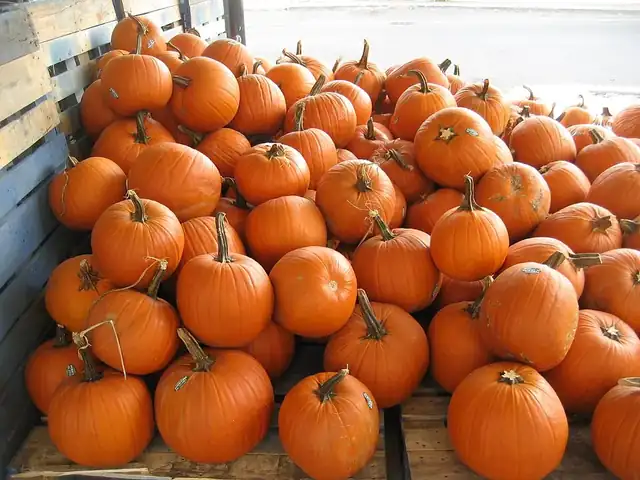
A pumpkin is a cultivated winter squash in the genus Cucurbita. The term is most commonly applied to round, orange-colored squash varieties, but does not possess a scientific definition. It may be used in reference to many different squashes of varied appearance and belonging to multiple species in the Cucurbita genus.
"Pumpkin" is sometimes used interchangeably with "squash" or "winter squash", and is commonly used for some cultivars of Cucurbita argyrosperma, Cucurbita ficifolia, Cucurbita maxima, Cucurbita moschata, and Cucurbita pepo.
C. pepo pumpkins are among the oldest known domesticated plants, with evidence of their cultivation dating to between 7000 BCE and 5500 BCE in Mesoamerica. Wild species of Cucurbita and the earliest domesticated species are native to North America (parts of present-day northeastern Mexico and the southern United States), but cultivars are now grown globally for culinary, decorative, and other culturally-specific purposes.
The pumpkin's thick shell encases edible seeds and pulp. Pumpkin pie is a traditional part of Thanksgiving meals in Canada and the United States and pumpkins are frequently used as autumnal seasonal decorations and carved as jack-o'-lanterns for decoration around Halloween. Commercially canned pumpkin purée and pie fillings are usually made of different pumpkin varieties from those intended for decorative use.
Description
Pumpkin fruits are a type of berry known as a pepo. Characteristics commonly used to define pumpkin include smooth and slightly ribbed skin and deep yellow to orange color, although white, green, and other pumpkin colors also exist.
While Cucurbita pepo pumpkins generally weigh between 6 and 18 lb, giant pumpkins can exceed a tonne in mass. Most are varieties of C. maxima that were developed through the efforts of botanical societies and enthusiast farmers. The largest cultivars frequently reach weights of over 75 lb. In October 2023, the record for heaviest pumpkin was set at 1,246.9 kg (2,749 lbs.).
Production
In 2024, world production of pumpkins (including squash and gourds) was 34.6 million tonnes, with India producing 27% and China 22% of the total (table).
In the United States
As one of the most popular crops in the United States, in 2017 over 1.5 e9lb of pumpkins were produced. The top pumpkin-producing states include Illinois, Indiana, Ohio, Pennsylvania, and California. Pumpkin is the state squash of Texas.
According to the Illinois Department of Agriculture, 95 percent of the U.S. crop intended for processing is grown in Illinois. Indeed, 41 percent of the overall pumpkin crop for all uses originates in the state, more than five times that of the nearest competitor, California, whose pumpkin industry is centered in the San Joaquin Valley; and the majority of that comes from five counties in the central part of the state. Nestlé, operating under the brand name Libby's, produces 85 percent of the processed pumpkin in the United States at their plant in Morton, Illinois.
In the fall of 2009, rain in Illinois devastated the Libby's pumpkin crop, which, combined with a relatively weak 2008 crop depleting that year's reserves, resulted in a shortage affecting the entire country during the Thanksgiving holiday season. Another shortage, somewhat less severe, affected the 2015 crop.
The pumpkin crop in the western United States, which constitutes approximately three to four percent of the national crop, is grown primarily for the organic market. Terry County, Texas, has a substantial pumpkin industry, centered largely on miniature pumpkins. Illinois farmer Sarah Frey is called "the Pumpkin Queen of America" and sells around five million pumpkins annually, predominantly for use as Jack-o-lanterns.
Culinary
Most parts of the pumpkin plant are edible, including the fleshy shell, the seeds, the leaves, and the flowers. When ripe, the pumpkin can be boiled, steamed, or roasted.
Shell and flesh
In North America, the flesh of pumpkins is part of the traditional autumn harvest, eaten roasted, as mashed pumpkin and in soups and pumpkin bread. Pumpkin pie is a traditional staple of the Canadian and American Thanksgiving holidays. Pumpkin purée is sometimes prepared and frozen for later use.
The whole shell can be baked and used as a bowl for soup.
The skin (the tough, fibrous exterior) can be used to make a vegetable stock.
Flowers
Pumpkin flowers are used as garnish and in salads.
Leaves
Leaves can be cooked in a stir fry, soup, or stew. Pumpkin leaves are also eaten in Zambia, where they are called chibwabwa and are boiled and cooked with groundnut paste as a side dish.
Seeds
Pumpkin seeds, also known as pepitas, are edible. They are about 1.5 cm (0.5 in) long, flat, asymmetrically oval, light green in color and usually covered by a white husk, although some pumpkin varieties produce seeds without them. Pumpkin seeds are a common snack when hulled, semi-hulled or roasted. Per typical serving, roasted pumpkin seeds are a rich source of protein, unsaturated fatty acids, and dietary minerals (roasted pumpkin seed nutrition).
Pumpkin seed oil
Pumpkin seed oil is a thick oil pressed from roasted seeds that appears red or green in color. When used for cooking or as a salad dressing, pumpkin seed oil is generally mixed with other oils because of its robust flavor. Pumpkin seed oil contains fatty acids such as oleic acid and alpha-linolenic acid.
More to savor

Chicken Vindaloo

Koko da Kosai (Fermented Corn Porridge and Bean Fritters)
A Closer Look at Tabasco sauce: From Ingredient to Meal