This longer reference provides the background behind the topic. Read it alongside the recipe collection when you want to connect an ingredient or food idea with a dish to prepare.
In this story
OverviewTrademark disputesProductionVarietiesCurrent saucesDiscontinued saucesPackagingOverview
Tabasco is an American brand of hot sauce made from vinegar, tabasco peppers, and salt. It is produced by the McIlhenny Company of Avery Island in southern Louisiana, having been created in 1868 by Edmund McIlhenny. Originally, the tabasco peppers were grown only on Avery Island; they are now primarily cultivated in Central America, South America, and Africa. The Tabasco sauce brand also has multiple varieties, including the original red sauce, habanero, jalapeño, chipotle, sriracha, and scorpion. Tabasco products are sold in more than 195 countries and territories, and packaged in 36 languages and dialects.
Trademark disputes
In a market full of similar products, the McIlhenny business pursued legal means to deny any other business from using the word "tabasco" to describe their hot sauce. This happened even though a common ingredient in these hot sauces was tabasco peppers. After five decades of litigation in several courtrooms across the United States, McIlhenny won the rights to using the word "tabasco" as a proprietary name in 1948 from a court in Louisiana. This, in spite of losses in other courts, allowed McIlhenny to call his sauce "tabasco" and barred any other competitor from using what used to be a generic name for the product except as an ingredient.
In Peppers: A Story of Hot Pursuits author Amal Naj researched these lawsuits and concluded "that there wasn't much of a basis for anyone to claim an exclusive right to the name," while the McIlhenny business maintains arguments to the contrary, asserting that their peppers and product are distinct enough to merit a trademark.
After the initial wave of lawsuits, their frequency diminished, but did not stop completely. In the 1970s Walter Greenleaf, a professor of horticulture at Auburn University, developed a new variety of tabasco chili, naming it "Greenleaf tabasco." Since Greenleaf's research was taxpayer-funded, the name threatened the McIlhenny business' exclusive right to the word "tabasco." The McIlhenny side threatened to sue. The case reached the U.S. attorney general's office, which settled the matter, saying the name had been validly published in the International Code of Nomenclature of Cultivated Plants. Years later a McIlHenny representative approached Greenleaf for seeds of his variety of tabasco, a request which Greenleaf was happy to satisfy to encourage the growth of more tabasco plants.
In 1979 the company's lawyers contacted Sam Weiner, an artist who went by Ms. Tabasco, claiming the use of "their client's trademark is improper and illegal." This dispute was never resolved.
Production
Originally, all peppers used in Tabasco sauce were grown on Avery Island. Over time, growers were selected throughout Louisiana to accommodate demand and during the 1960s, the company established farms in various Latin American countries. As of 2013, peppers grown on the island are used to produce seed stock, which is then shipped to foreign growers. More predictable weather and readily available farmland in these locales allow a constant, year-round supply. This ensures the availability of peppers should severe weather or other problems occur at a particular growing location. Following company tradition, peppers are picked by hand. To ensure ripeness, pickers compare peppers to a little red stick (le petit bâton rouge); peppers that match the color of the stick are then introduced into the sauce production process.
Peppers are ground into a mash on the day of harvest and placed along with salt in white oak barrels previously used for whiskey of various distilleries. To prepare the barrel, the inside of the barrel is decharred (top layer of wood is removed), torched, and cleaned, to minimize the presence of any residual whiskey. The barrels are then used in warehouses on Avery Island for aging the mash. After aging for up to three years, the mash is strained to remove skins and seeds. The resulting liquid is then mixed with distilled vinegar, stirred occasionally for a month, and then bottled as a finished sauce. Tabasco has released a Tabasco reserve edition with peppers aged for up to eight years, mixed with wine vinegar.
Tabasco Diamond Reserve Edition was a limited bottling released in 2018 to commemorate the brand's 150th anniversary. This sauce consists of peppers that have been aged for up to 15 years, then mixed with sparkling white wine vinegar. For many years, the salt used in Tabasco production came from the Avery Island salt dome, the largest such structure along the Louisiana coast.
Varieties
Several sauces are produced under the Tabasco brand name. A few of the varieties include:
Current sauces
Buffalo Style Hot Sauce
Cayenne garlic
Chipotle Sauce
Family Reserve
Green Jalapeño Sauce
Habanero
Original Red Sauce
Raspberry Chipotle
Roasted Pepper Sauce
Salsa Picante
Scorpion Sauce
Sriracha
Sweet and Spicy
Smoked
Discontinued sauces
Rocoto pepper sauce
The habanero, chipotle, and garlic sauces include the tabasco peppers blended with other peppers, whereas the jalapeño variety does not include tabasco peppers. None of these sauces, however, has the three-year aging process the flagship product uses. The brand also produces a selection of Tabasco Chocolate.
Packaging
Tabasco brand pepper sauce is sold in more than 195 countries and territories and is packaged in 36 languages and dialects. The Tabasco bottle is still modeled after the cologne-style bottles used for the first batch of sauce in 1868. As many as 720,000 two-ounce (57 ml) bottles of Tabasco sauce are produced daily at the Tabasco factory on Avery Island. Bottles range from the common two-ounce and five-ounce (59 ml and 148 ml) bottles, up to a 1 gal jug for food-service businesses, and down to a 1/8 USoz miniature bottle. Also, 0.11 USoz portion-control packets of Tabasco sauce are produced. These one-eighth-ounce bottles of Tabasco, bearing the presidential seal, are served on Air Force One. The US military has included Tabasco sauce in Meals, Ready-to-Eat (MREs) since the 1980s.
The Australian, British and Canadian armies also issue small bottles of Tabasco sauce in their rations.
More to savor

Chicken Vindaloo
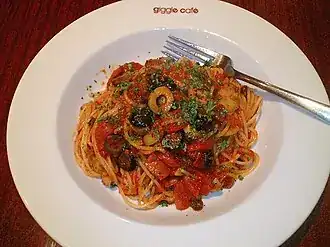
Spaghetti alla Puttanesca
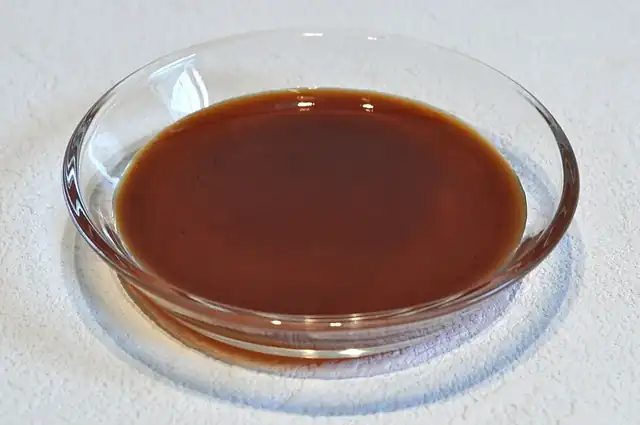
A Closer Look at Worcestershire sauce: From Ingredient to Meal