The dish is a starting point for exploring a wider food story. The guide below looks more closely at its background and different forms. When you want to cook, visit the recipe collection for ingredient quantities and step-by-step methods.
In this story
OverviewThe first known use of the wordAs a tradition in royal Malay banquetsComposition and cooking methodCooking process - merendangTypes of rendang in Malay Peninsula and SingaporeTypes of rendang in West SumatraOverview
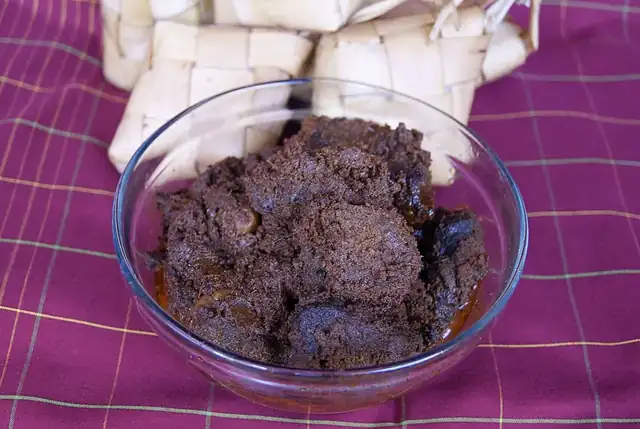
Rendang is a stir-fried meat dish or dry curry made of meat stewed in coconut milk and spices, widely popular across Indonesia, Malaysia, Singapore, Brunei, and the southern parts of the Philippines, where each version is considered local cuisine. It refers to both a cooking method of frying and the dish cooked in that way. The process involves slowly cooking meat in spiced coconut milk in an uncovered pot or pan until the oil separates, allowing the dish to fry in its own sauce, coating the meat in a rich, flavorful glaze.
Rooted in Malay and Minangkabau, rendang developed at the cultural crossroads of the Malacca Strait. The dish carries strong Indian influences, as many of its key ingredients are staples in Indian cooking. The introduction of chili peppers by the Portuguese through the Columbian exchange after the capture of Malacca in 1511, played a key role in the evolution of rendang. Malay and Minangkabau traders frequently carried rendang as provisions, allowing the dish to travel naturally through cultural exchange between the Sumatra and Malay Peninsula. In 20th century, the deeply rooted migratory tradition of the Minangkabau people further maintained and contributed to the dish's spread, as they introduced Minang-style rendang to the various places they settled.
The first known use of the word
Food historian Fadly Rahman traces the earliest reference to rendang to the early 16th-century Malay manuscript Hikayat Amir Hamzah associated with the Malacca Sultanate (1400–1528). Written during the spread of Islam in the Malay world, this adaptation of the Persian Hamzanama was later compiled into Malay and intended to inspire Malacca's soldiers in their fight against the Portuguese in 1511. In Malay version, there mentioned the words "rendang" and "merendang" (roasting) which is quoted as follows:
This passage suggests that merendang refers to a cooking technique, while rendang describes the resulting dish have been part of the Malay vocabulary since the 16th century.
As a tradition in royal Malay banquets
Khir Johari notes that rendang tumis is mentioned in the Hikayat Hang Tuah, a classic Malay literary masterpiece from around the 17th-century. Another manuscript, Hikayat Awang Sulung Merah Muda, reflects 18th-century life and cooking traditions. In the narration, a prince hunts and captures a pelanduk (mouse deer), which is then prepared in various styles — tumis, rendang, and gulai. Tumis refers to a dish that is more like soup, while rendang resembles the slow-cooked dish we know today. These manuscripts offer a glimpse into the Malay cuisine of the 17th and 18th centuries.
Historical records from the 19th century, including newspaper reports and travelogues, often described the key ingredients of rempah (spice paste) used in rendang, as well as its regional variations. Renowned for his refined taste and hospitality, Sultan Abu Bakar of Johor frequently hosted lavish banquets at his Istana Besar in Johor Bahru. In 1873, J.F.A. McNair described a royal Malay banquet featuring dishes such as rendang tenggiri and rendang chinchang Plentong. In 1881, when King David Kalākaua of Hawaii visited Johor, Sultan Abu Bakar served rendang tenggiri as part of the royal reception.
Composition and cooking method
Rendang is most often described as meat slow-cooked in coconut milk and spices until it becomes tender. If cooked properly, dry rendang can last for as long as four weeks. Prior to refrigeration technology, this style of cooking enabled preservation of large amounts of meat in the tropical climate, and therefore became a popular cooking technique. Its durability is one of the reasons that today, prepackaged rendang is sent as food aid relief for natural disaster survivors in Indonesia. The preferred cut of beef for rendang is lean meat of the rear leg; i.e. topside or round beef, which is considered perfect for slow cooking.
Rendang is rich in spices. Along with the main meat ingredient, rendang uses coconut milk and a paste of mixed ground spices, including ginger, galangal, turmeric leaves, lemongrass, garlic, shallots, chillis and other spices. This spice mixture is called pemasak in Minangkabau. The spices, garlic, shallot, ginger and galangal used in rendang have antimicrobial properties and serve as natural organic preservatives. Although some culinary experts describe rendang as a curry, the dish is usually not considered as such in Indonesia or Malaysia since it is richer and contains less liquid than is normal for curries.
Cooking process - merendang
Azizah Ja'afar describes the cooking process of rendang (merendang) as involves simmering the meat in spiced coconut milk in an uncovered pot or pan until the coconut milk's oil separates and coats the meat, giving it a rich, glossy finish. With a slow fire and constant stirring, it takes around three hours for five kilograms of meat to reduce from a broth (when all the ingredients come together in a wok). From there, it requires an additional two hours before reaching the traditional rendang consistency.
Types of rendang in Malay Peninsula and Singapore
Betty Yew's cookbook Rasa Malaysia, published in 1982, features 16 rendang recipes that highlight regional nuances. Rendang can be made with a variety of proteins, including buffalo, chicken, duck, mutton, venison, shellfish, birds, and grasshoppers. Popular regional variations include rendang kerbau (buffalo rendang) from Rembau and rendang udang galah (giant freshwater prawn rendang) from Lenggong. Vegetable ingredients like jackfruit, pucuk teh, pucuk lampin, and pucuk maman (Cleome gynandra) are often added, reflecting the ingenuity of Malay communities in utilizing local resources.
Types of rendang in West Sumatra
Today, rendang is widely enjoyed beyond ceremonial settings and has become a popular souvenir in Padang. While traditionally made with buffalo meat or beef, rendang now features a variety of ingredients. These include chicken, which cooks faster and is more economical; duck, common in areas like Payakumbuh; goat meat, often enjoyed in Agam; and seafood options like shellfish and salted fish. Other creative versions include randang talua, made with tapioca flour and eggs, and shredded beef or chicken rendang, which resembles meat floss but with thicker fibers.
In Minangkabau, randang is broadly categorized into two styles based on regional influences: randang darek and randang pasisia. These variations reflect the geographical and cultural diversity of the highland (darek) and coastal (pasisia) areas of West Sumatra. Each variation of Rendang highlights the versatility of its signature spices, adapting to the availability of ingredients across different regions.
More to savor
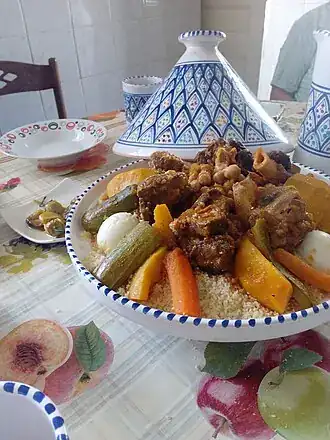
Algerian Couscous with Meat and Vegetables
Sylheti Rice Pudding
Cassoulet: A Slow-Cooked Story from Southern France