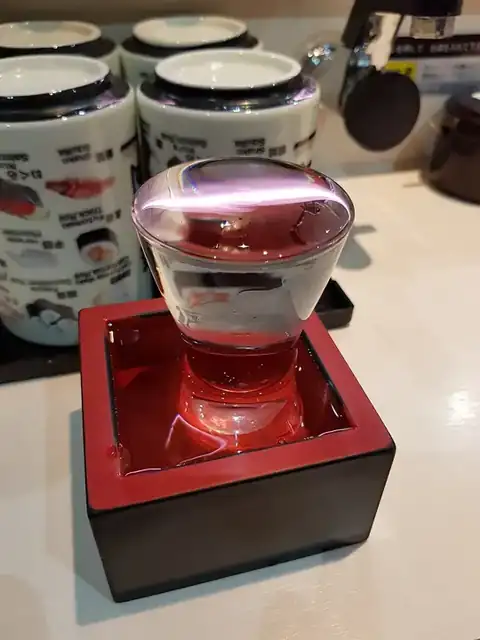
A drink can be an everyday routine, something shared with company, or a way to explore a food tradition. The background below looks more closely at the preparation and story behind the cup or glass.
Overview
Sake, saké, or saki, also referred to as Japanese rice wine (specified as 日本酒 "nihonshu" in Japanese, as 酒 can refer to all alcohol), is an alcoholic beverage of Japanese origin made by fermenting rice that has been polished to remove the bran. Despite the name Japanese rice wine, sake, and indeed any East Asian rice wine (such as huangjiu and cheongju), is produced by a brewing process more akin to that of beer, where starch is converted into sugars that ferment into alcohol, whereas in wine, alcohol is produced by fermenting sugar that is naturally present in fruit, typically grapes, in a process known as multiple parallel fermentation.
Although similar, the brewing process for sake differs from the process for beer, in which the conversion from starch to sugar and then from sugar to alcohol occurs in two distinct steps. Like other rice wines, these conversions occur simultaneously when brewing sake. The typical alcohol content also differs between sake, wine, and beer; while most beer contains 3–9% ABV and wine generally contains 9–16% ABV, undiluted sake contains 18–20% ABV (although this is typically lowered somewhat by diluting with water prior to bottling).
In Japanese, the word (kanji: 酒) can refer to any alcoholic drink, while the beverage called sake in English is usually termed . Under Japanese liquor laws, sake is labeled with the word , a synonym not commonly used in conversation.
Until the Kamakura period
The origin of sake is unclear; however, the method of fermenting rice into alcohol spread to Japan from China around 500 BCE. The earliest reference to the use of alcohol in Japan is recorded in the Book of Wei in the Records of the Three Kingdoms. This 3rd-century Chinese text speaks of Japanese drinking and dancing.
Muromachi period
Before the 1440s in the Muromachi period (1333–1573), the Buddhist temple Shōryaku-ji invented various innovative methods for making sake. Because these production methods are the origin of the basic production methods for sake brewing today, Shoryakuji is often said to be the birthplace of . Until then, most sake had been with a different process from today's, but after that, clear was established. The main production methods established by Shōryaku-ji are the use of all polished rice, three-stage fermentation, brewing of starter mash using acidic water produced by lactic acid fermentation, and pasteurization. This method of producing starter mash is called . These innovations made it possible to produce sake with more stable quality than before, even in temperate regions.
These things are described in , the oldest known technical book on sake brewing written in 1355 or 1489, and , a diary written between 1478 and 1618 by monks of Kōfuku-ji Temple in the Muromachi period.
Edo period
By the Genroku era (1688–1704) of the Edo period (1603–1867), a brewing method called was developed in which a small amount of distilled alcohol (shōchū) was added to the mash to make it more aromatic and lighter in taste, while at the same preventing deterioration in quality. This originates from the distilled alcohol addition used in modern sake brewing.
Rice
The rice used for brewing sake is called , or officially . There are at least 123 types of sake rice in Japan. Among these, Yamada Nishiki, Gohyakumangoku, Miyama Nishiki and Omachi rice are popular. The grain is larger, stronger (if a grain is small or weak, it will break in the process of polishing), and contains less protein and lipid than ordinary table rice. Because of the cost, ordinary table rice, which is cheaper than sake rice, is sometimes used for sake brewing, but because sake rice has been improved and optimized for sake brewing, few people eat it.
Premium sake is mostly made from sake rice. However, non-premium sake is mostly made from table rice. According to the Japan Sake and Shochu Makers Association, premium sake makes up 25% of total sake production, and non-premium sake makes up 75% of sake production. In 2008, a total of 180,000 tons of polished rice were used in sake brewing, of which sake rice accounted for 44,000 tons (24%), and table rice accounted for 136,000 tons (76%).
Serving sake
In Japan, sake is served chilled, at room temperature, or heated, depending on the preference of the drinker, the characteristics of the sake, and the season. Typically, hot sake is a winter drink, and high-grade sake is not usually drunk hot because the flavors and aromas may be lost. Most lower-quality sake is served hot because that is the traditional way, and it often tastes better that way, not so that flaws are covered up. There are gradations of temperature both for chilling and heating, about every 5 C-change, with hot sake generally served around 50 C, and chilled sake around 10 C, like white wine. Hot sake that has cooled may be reheated.
Sake is traditionally drunk from small cups called or and poured into the from ceramic flasks called . This is very common for hot sake, where the flask is heated in hot water, and the small cups ensure that the sake does not get cold in the cup, but it may also be used for chilled sake. Traditionally one does not pour one's own drink, which is known as , but instead members of a party pour for each other, which is known as . This has relaxed in recent years but is generally observed on more formal occasions, such as business meals, and is still often observed for the first drink.
Seasonality
Because the cooler temperatures make it more difficult for bacteria to grow, sake brewing traditionally took place mainly in winter, and this was especially true from 1673 during the Edo period until the early 20th century during the Showa era. While it can now be brewed year-round, seasonality is still associated with sake, particularly artisanal ones. The most visible symbol of this is the , a globe of cedar leaves traditionally hung outside a brewery when the new sake is brewed. The leaves start green but turn brown over time, reflecting the maturation of the sake. These are now hung outside many restaurants serving sake. The new year's sake is called , and when initially released in late winter or early spring, many brewers have a celebration known as .
Traditionally sake was best transported in the cool spring to avoid spoilage in the summer heat, with a secondary transport in autumn, once the weather had cooled, known as —this autumn sake has matured over the summer.
More to savor
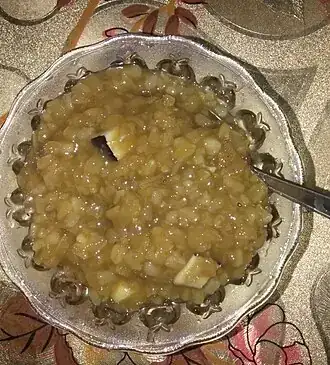
Sylheti Rice Pudding
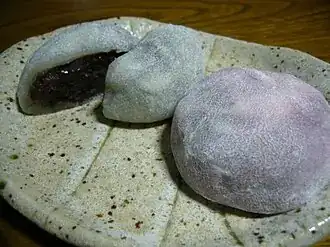
Daifuku (Sweet Filled Mochi)

Kombucha: The Fermented Tea with a Tangy Food Story