The dish is a starting point for exploring a wider food story. The guide below looks more closely at its background and different forms. When you want to cook, visit the recipe collection for ingredient quantities and step-by-step methods.
In this story
OverviewMethods of preparationAsianAngel food cakeBoston cream pieGénoiseJoconde sponge cakeOverview
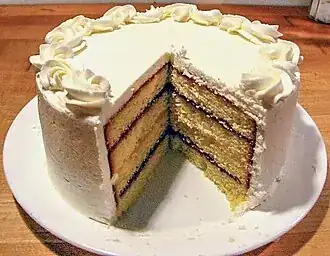
Sponge cake is a light cake made with egg whites, flour and sugar, sometimes leavened with baking powder. Most sponge cakes contain egg yolks, but some do not, such as angel food cake.
The sponge cake is thought to be one of the first non-yeasted cakes, and the earliest attested sponge cake recipe in English is found in a book by the poet Gervase Markham, The English Huswife (1615). The cake was more like a cracker: thin and crisp.
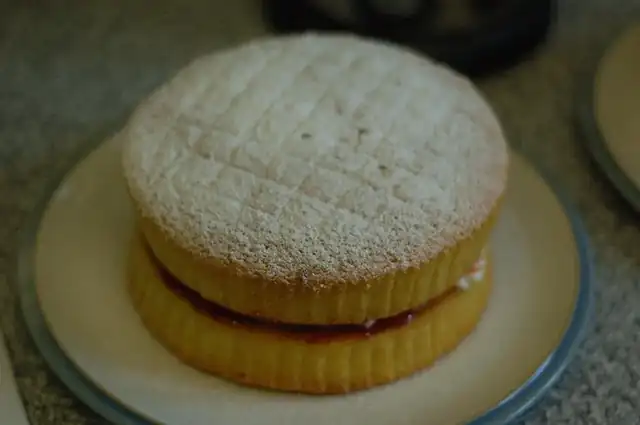
The modern sponge cakes arose when bakers started using beaten eggs as a leavening agent in the mid-19th century. The creation of baking powder by a British food manufacturer in 1843 allowed the addition of butter, permitting the creation of the Victoria sponge. In American baking terms, a sponge cake is different from a butter cake.
Methods of preparation
The basic whisked sponge cake contains no fat. It is made by whisking egg whites and caster sugar and gently folding in flour. The process of whisking egg whites incorporates air bubbles to create a foam by agitating the protein albumen to create a partially coagulated membrane, making the egg whites stiffer and increasing their volume. This type of cake, also called foam cake, depends on aeration of eggs and heat to rise. Some types of sponges are baked in ungreased pans to improve the cake's rise by allowing the batter to adhere and climb the sides of the pan. To maintain the moisture of the cake it is sometimes made with potato flour.
Variations on the basic sponge sometimes add butter or egg yolks to moisten the cake. For Genoise cake, flour and melted butter are added to the egg mixture for a moister cake. The "biscuit" sponge from early American cuisine is made by beating egg yolks with sugar, then alternately folding in whisked egg whites and flour. Anne Willan says both types of sponge cake are represented in French cuisine. According to Willan "sponge may have some butter added, but not much or it will not rise". Cream of tartar or baking soda is recommended by some turn-of-the-20th-century cookbooks to make Swiss rolls more pliable and easier to roll.
For some cakes, such as the Victoria sponge, fat and sugar are creamed before eggs and flour are incorporated into the batter, similar to pound cake. In British English, layer cakes such as the Victoria sponge are called "sandwich sponge". This type of buttery cake was not possible without baking powder, which was discovered by English food manufacturer Alfred Bird in 1843, allowing the sponge to rise higher.
Asian
In the Philippines, sponge cakes and chiffon cakes were introduced during the Spanish period. They are known collectively as mamón. They are typically baked as cupcakes (torta), as loaves (taisan), or as cake rolls (pianono). Traditionally they are simply served with butter (or margarine) and white sugar. Variants of mamón also use unique ingredients, the most common being purple yam and pandan leaves which result in the ube cake and the buko pandan cake. Crispy cookie-like versions are known as mamón tostado and broas.
Steamed sponge cakes such as the ma lai gao are commonly found in Malaysia. Chinese almond sponge is steamed and topped with boiled icing, chocolate, vegetables or fresh fruit. Korean sponge called saeng is usually made with rice flour and topped with whipped topping and fruit. Some Vietnamese varieties may have fresh herbs such as mint, lemongrass or basil added to the batter, and be topped with caramelized tropical fruit. Milk and jaggery are added to sponge cake in India which is served with the creamy Sri Lankan speciality "avocado crazy". Western-style sponge cakes topped with whipped cream and strawberries are popular in Japan where sponge is also used as a base for cheesecakes.
Angel food cake
Angel food cake was invented in 19th-century America. It does not contain egg yolks or butter and is leavened using only egg whites and baking powder. The delicate cake is baked in an ungreased pan and cooled upside down.
Boston cream pie
Boston cream pie, the official state dessert of Massachusetts, is a chocolate-glazed, layered yellow sponge cake filled with pastry cream. It may be based on the Washington pie, originally two layers of yellow sponge cake with jam filling and a dusting of icing sugar. The first known written recipe from the 1878 Granite Iron Ware Cook Book uses baking powder for the sponge. Maria Parloa published several recipes for a cream pie, including one for a chocolate cream pie. Parloa's recipe is the closest to the modern Boston cream pie.
Génoise
French pastry chefs created a cake texture that resembled pound cake more than the traditional sponge cake. Techniques were developed to make the cake lighter, including beating the eggs over heat or beating the egg yolks and whites separately.
Joconde sponge cake
A relative of the Génoise, the Joconde sponge cake (or Biscuit Joconde) is a thin sponge cake made with ground almonds. It can be used as a layer in a layer cake (for example an opera cake), or for decorative purposes as Joconde imprime.
More to savor
Tattie Scones
Apple Crisp I
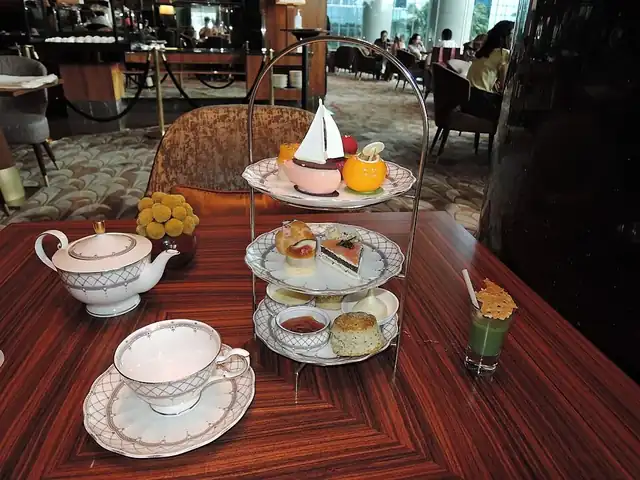
Afternoon Tea or Dinner? Britain's Many Meanings of Tea