The dish is a starting point for exploring a wider food story. The guide below looks more closely at its background and different forms. When you want to cook, visit the recipe collection for ingredient quantities and step-by-step methods.
In this story
OverviewMainland ChinaHong Kong and MacauTaiwanJapanIndonesia, Malaysia, Myanmar, the Philippines, Thailand, and SingaporeCambodiaVietnamOverview
Spring rolls are rolled appetizers or dim sum commonly found in Chinese, Vietnamese, Thai and Southeast Asian cuisines. The wrapper, fillings, and cooking technique vary by region but are generally filled with vegetables or ground meat.
Mainland China
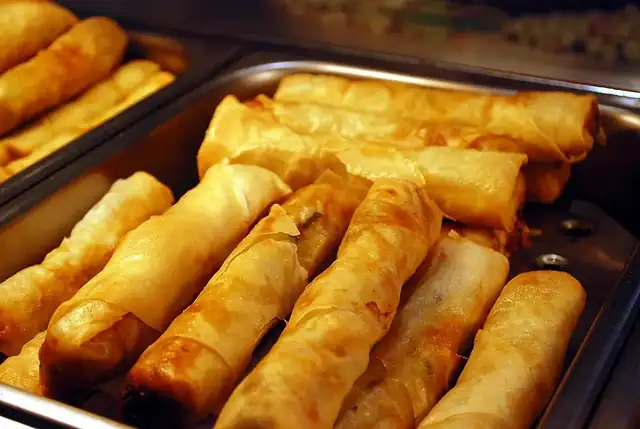
Spring rolls are a seasonal food consumed during the spring; it started as a pancake filled with the new season's spring vegetables, a welcome change from the preserved foods of the long winter months. In Chinese cuisine, spring rolls are savoury rolls with cabbage and other vegetable fillings inside a thinly wrapped cylindrical pastry. They are usually eaten during the Spring Festival in mainland China, hence the name. Meat varieties, particularly pork, are also popular. Fried spring rolls are generally small and crisp. They can be sweet or savoury, the former often with red bean paste filling, and the latter typically prepared with vegetables. They are fully wrapped before being pan-fried or deep-fried.
Non-fried spring rolls are typically bigger and more savoury. Unlike fried spring rolls, non-fried ones are typically made by filling the wrapping with pre-cooked ingredients. Traditionally, they are a festive food eaten during the Cold Food Day festival and the Tomb Sweeping Day festival in spring to remember and pay respect to ancestors. The Hakka population sometimes also eats spring rolls on the third day of the third month of the lunar calendar (三月三 sān yuè sān). The wrappings can be a flour-based mix or batter.
Hong Kong and Macau
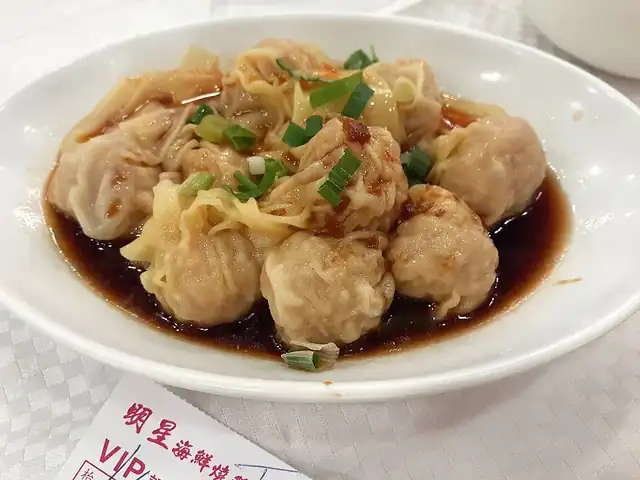
Spring roll is a fried dish usually available as a dim sum. They typically contain minced pork, shredded carrot, bean sprouts and other vegetables served with dipping sauce.
Taiwan
In Taiwan, the most commonly eaten non-fried spring rolls are popiah, called lūn-piánn (潤餅) or po̍h-piánn (薄餅) in Taiwanese. In northern Taiwan, the ingredients are generally flavoured with herbs, stir-fried, and sometimes topped with a finely ground peanut powder before being wrapped. In southern Taiwan, the ingredients are generally boiled or blanched in plain water. Sometimes caster or super fine sugar is added along with the peanut powder before all the ingredients are wrapped.
Japan
In Japan, spring rolls are known as harumaki (春巻き) and are often served with karashi mustard or soy sauce.
Indonesia, Malaysia, Myanmar, the Philippines, Thailand, and Singapore
Lumpia is the name for spring rolls in Indonesia and the Philippines, which was derived from Southern Chinese spring rolls. The name lumpia derives from Hokkien lunpia and was introduced in the Philippine islands during the 17th century. It is a savoury snack made of thin crêpe pastry skin enveloping a mixture of savoury fillings, consisting of chopped vegetables (including carrots, cabbage, green beans, bamboo shoots, banana heart and leeks), or sometimes also minced meat (chicken, shrimp, pork or beef). It is often served as an appetizer or snack, and might be served deep-fried or fresh (unfried). In Malaysia, Singapore and Thailand, it is called popiah as in Taiwan, while in Myanmar, it is referred as kawpyan (ကော်ပြန့်).
Cambodia
Cambodian fried spring rolls are called chai yor (ចៃយ៉) or naem chien (ណែមចៀន). Despite originating in the Chinese Cambodian community, fried spring rolls have spread throughout the country. They are different from Chinese spring rolls with their filling often not being cooked before frying, making Cambodian spring rolls lighter. Also, fish sauce is usually used in the filling, instead of oyster or soy sauce, and Cambodian spring rolls, if not reheated, are fried only once.
Vietnam
The fried version with minced pork or chicken is called imperial rolls or chả giò (southern Vietnam), nem cuốn, chả cuốn or Nem rán (northern Vietnam). They are often called "egg rolls" and "spring rolls" in Western countries, which is a misnomer. Central Vietnam has its own version of a fried roll called "ram". Ram is always made from whole shell-on shrimp or chopped de-shelled shrimp and some green onions, wrapped in rice paper wrappers and deep fried. Like most speciality food items from central Vietnam, ram is not widely available in Vietnamese restaurants overseas.
A Vietnamese imperial roll is different from a Chinese spring roll in that it is typically smaller and contains ground or chopped meats/seafood such as pork, crab, shrimp, chicken, taro or cassava, glass noodles, wood-ear fungi or oyster mushrooms, and shredded carrots. Rice paper is traditionally used as wrappers. However, several Vietnamese restaurants in Western countries may use egg spring roll wrappers due to the unavailability of rice paper or ease of use.
Rice paper rolls or summer rolls are a Vietnamese delicacy known as "gỏi cuốn" or "nem cuốn". Depending on the region, salad rolls were made differently. Some vegetarian families make vegetarian rice paper rolls rather than meat rice paper rolls. However, the typical ingredients include slivers of cooked pork (most often cha pork sausages), shrimp, sometimes chicken or tofu, fresh herbs like basil or cilantro, lettuce, cucumbers, sometimes fresh garlic, chives, rice vermicelli, all wrapped in moistened rice paper. A typical "gỏi cuốn" may only contain boiled pork, boiled rice noodles, cucumber, carrot and herbs. Fresh Vietnamese rice paper rolls can be made at home or found at Vietnamese restaurants and some grocery stores. They are served at room temperature with dipping sauce. Nước chấm, tương xào, or a hoisin peanut sauce are all common dipping sauces.
A typical hoisin dipping sauce includes chilli, hoisin sauce, peanut butter and sugar. A standard "nước mắm pha" (nước chấm) dipping sauce is composed of fish sauce, lime, garlic, sugar, and chillies or simply fish sauce, sugar and vinegar.
More to savor

Austrian Napkin Dumpling (Serviettenknödel)

English Breakfast
Kebabs: The Many Dishes Behind a Familiar Menu Word