This longer reference provides the background behind the topic. Read it alongside the recipe collection when you want to connect an ingredient or food idea with a dish to prepare.
In this story
OverviewBasic tastesPerceptual independence from salty and sweet tasteMeasuring relative tastesFat tasteNeuroscience of tasteTaste in insectsOverview
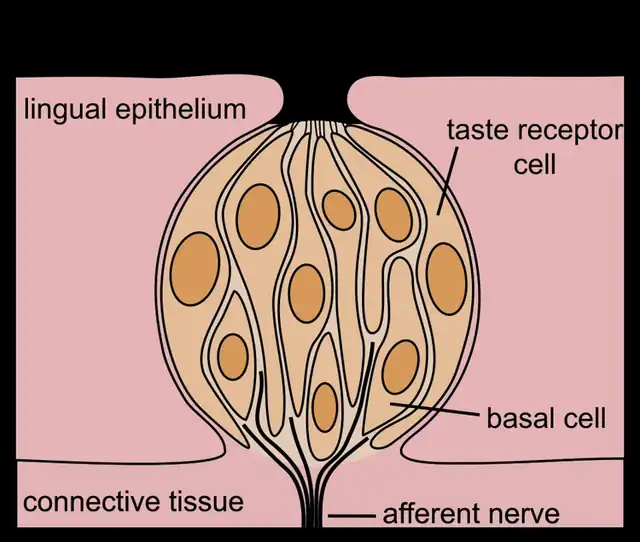
The gustatory system or sense of taste is the sensory system that is partially responsible for the perception of taste. Taste is the perception stimulated when a substance in the mouth reacts chemically with taste receptor cells located on taste buds in the oral cavity, mostly on the tongue. Taste, along with the sense of smell and trigeminal nerve stimulation (registering texture, pain, and temperature), determines flavors of food and other substances. Humans have taste receptors on taste buds and other areas, including the upper surface of the tongue and the epiglottis. The gustatory cortex is responsible for the perception of taste.
The tongue is covered with thousands of small bumps called papillae, which are visible to the naked eye. Within each papilla are hundreds of taste buds. The exceptions to this are the filiform papillae, which do not contain taste buds. There are between 2000 and 5000 taste buds that are located on the back and front of the tongue. Others are located on the roof, sides and back of the mouth, and in the throat. Each taste bud contains 50 to 100 taste receptor cells.
Taste receptors in the mouth sense the five basic tastes: sweetness, sourness, saltiness, bitterness, and savoriness (also known as savory or umami). Scientific experiments have demonstrated that these five tastes exist and are distinct from one another. Taste buds are able to tell different tastes apart when they interact with different molecules or ions. Sweetness, savoriness, and bitter tastes are triggered by the binding of molecules to G protein-coupled receptors on the cell membranes of taste buds. Saltiness and sourness are perceived when alkali metals or hydrogen ions meet taste buds, respectively.
Basic tastes
The gustatory system allows animals to distinguish between safe and harmful food and to gauge different foods' nutritional value. Digestive enzymes in saliva begin to dissolve food into base chemicals that are washed over the papillae and detected as tastes by the taste buds. The tongue is covered with thousands of small bumps called papillae, which are visible to the naked eye. Within each papilla are hundreds of taste buds. The exception to this are the filiform papillae, which do not contain taste buds. There are between 2,000 and 5,000 taste buds that are located on the back and front of the tongue. Others are located on the roof, sides and back of the mouth, and in the throat. Each taste bud contains 50 to 100 taste-receptor cells.
The five specific tastes received by taste receptors are saltiness, sweetness, bitterness, sourness, and savoriness (often known by its Japanese name umami, which translates to 'deliciousness').
Perceptual independence from salty and sweet taste
There are doubts regarding whether umami is different from salty taste, as standalone glutamate (glutamic acid) without table salt ions (Na+), is perceived as sour, salt taste blockers reduce discrimination between monosodium glutamate and sucrose in rodents, since sweet and umami tastes share a taste receptor subunit; and part of the human population cannot tell apart umami from salty.
If umami does not have perceptual independence, it could be classified with other tastes like fat, carbohydrate, metallic, and calcium, which can be perceived at high concentrations but may not offer a prominent taste experience.
Measuring relative tastes
Measuring the degree to which a substance presents one basic taste can be achieved in a subjective way by comparing its taste to a reference substance.
Sweetness is subjectively measured by comparing the threshold values, or level at which the presence of a dilute substance can be detected by a human taster, of different sweet substances. Substances are usually measured relative to sucrose, which is usually given an arbitrary index of 1 or 100. Rebaudioside A is 100 times sweeter than sucrose; fructose is about 1.4 times sweeter; glucose, a sugar found in honey and vegetables, is about three-quarters as sweet; and lactose, a milk sugar, is one-half as sweet.
The sourness of a substance can be rated by comparing it to very dilute hydrochloric acid (HCl).
Fat taste
Recent research reveals a potential taste receptor called the CD36 receptor. CD36 was targeted as a possible lipid taste receptor because it binds to fat molecules (more specifically, long-chain fatty acids), and it has been localized to taste bud cells (specifically, the circumvallate and foliate papillae). There is a debate over whether we can truly taste fats, and supporters of human ability to taste free fatty acids (FFAs) have based the argument on a few main points: there is an evolutionary advantage to oral fat detection; a potential fat receptor has been located on taste bud cells; fatty acids evoke specific responses that activate gustatory neurons, similar to other currently accepted tastes; and, there is a physiological response to the presence of oral fat.
Although CD36 has been studied primarily in mice, research examining human subjects' ability to taste fats found that those with high levels of CD36 expression were more sensitive to tasting fat than were those with low levels of CD36 expression; this study points to a clear association between CD36 receptor quantity and the ability to taste fat.
Neuroscience of taste
The glossopharyngeal nerve innervates a third of the tongue including the circumvallate papillae. The facial nerve innervates the other two thirds of the tongue and the cheek via the chorda tympani.
The pterygopalatine ganglia are ganglia (one on each side) of the soft palate. The greater petrosal, lesser palatine and zygomatic nerves all synapse here. The greater petrosal carries soft palate taste signals to the facial nerve. The lesser palatine sends signals to the nasal cavity, which is why spicy foods cause nasal drip. The zygomatic sends signals to the lacrimal nerve that activate the lacrimal gland, which is the reason that spicy foods can cause tears. Both the lesser palatine and the zygomatic are maxillary nerves (from the trigeminal nerve).
The special visceral afferents of the vagus nerve carry taste from the epiglottal region of the tongue.
Taste in insects
Insects taste using small hair-like structures called taste sensilla, specialized sensory organs located on various body parts such as the mouthparts, legs, and wings. These sensilla contain gustatory receptor neurons (GRNs) sensitive to a wide range of chemical stimuli.
Insects respond to sugar, bitter, acid, and salt tastes. However, their taste spectrum extends to include water, fatty acids, metals, carbonation, RNA, ATP, and pheromones. Detecting these substances is vital for behaviors like feeding, mating, and oviposition.
More to savor
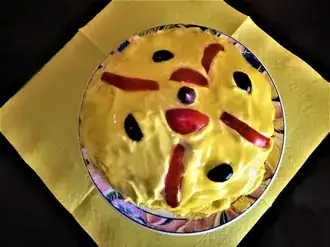
Salată de Boeuf (Romanian Beef Salad)
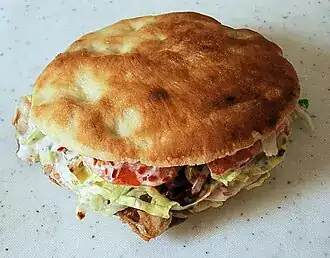
Döner Kebab

Agriculture: A Closer Look at Food and How We Eat