This longer reference provides the background behind the topic. Read it alongside the recipe collection when you want to connect an ingredient or food idea with a dish to prepare.
Overview
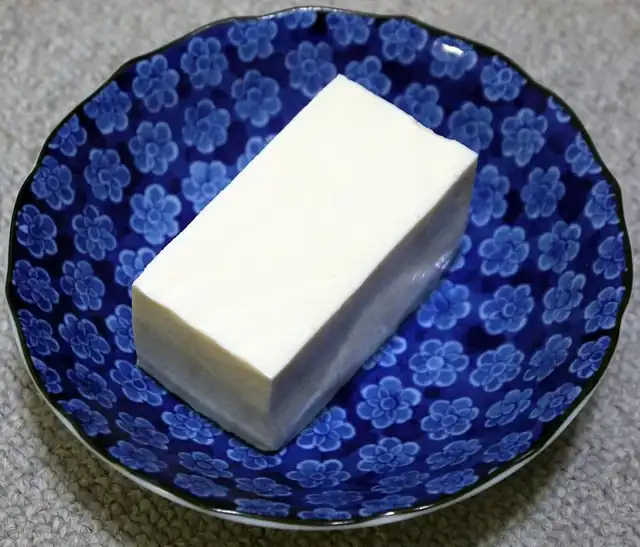
Tofu or bean curd is a food prepared by pressing the curds of coagulated soy milk into solid white blocks of varying softness: 'silken', 'soft', 'firm', and 'extra (or super) firm'.
It originated in China and has been consumed for over 2,000 years. Tofu is a traditional component of many East Asian and Southeast Asian cuisines; in modern Western cooking, it is commonly used as a meat substitute.
Nutritionally, tofu is low in calories, while providing a rich source of protein. Cultivation of soybeans has one of the lowest needs for land use (1.3 m2/ 1000 kcal) and emits some of the lowest amounts of greenhouse gas emissions per gram of edible protein of any food (1.6 kg / 100 g protein).
China
A form of tofu may have been discovered during the Han dynasty (202 BCAD 220), but it did not become a popular food in China until the Song dynasty (960–1279).
In China, tofu was traditionally eaten at the graves of deceased relatives. Ghosts were said to have long since lost their chins and jaws, so only tofu was soft enough for them to eat. Before the advent of refrigeration in China, tofu was usually sold only in the winter because it did not spoil easily in cold weather. In the warmer months, once made, tofu would spoil if left for more than a day.
Japan
Tofu was introduced to Japan by Zen Buddhist monks, who initially called it "Chinese curd". The earliest Japanese document concerning tofu refers to the dish being served as an offering at the Kasuga Shrine in Nara in 1183.
The tofu that was introduced from China is thought to have originally been hard tofu such as island tofu from Okinawa, hard tofu from Hakusan City in Ishikawa Prefecture, Gokayama City in Toyama Prefecture, and Iya region in Tokushima Prefecture. Gradually, production methods were devised to produce smooth tofu with a pleasant texture, and modern silken tofu was born. The book Tofu Hyakuchin (豆腐百珍), published in 1782 of the Edo period, lists 100 recipes for cooking tofu.
Production
Regardless of the product or scale of the production, the production of tofu essentially consists of:
The preparation of soy milk
The coagulation of the soy milk to form curds (douhua)
The pressing of the soybean curds to form tofu cakes
It is similar to the production of dairy cheese by coagulating the milk of dairy animals to form curds and pressing and aging the curds to form cheese. Typical tofu-making procedures are cleaning, soaking, grinding beans in water, filtering, boiling, coagulation, and pressing. There are also types, such as Japanese raw silken tofu, in which the curds are not pressed.
Coagulation of the protein and oil (emulsion) suspended in boiled soy milk is the most important step in the production of tofu. Salts or acids are commonly used as coagulants. Many variables affect the process, including the variety and percentage of protein in the soybeans used, slurry cooking temperature and coagulation temperature.
Soybean proteins are mainly composed of 7S and 11S proteins. The negative surface charges on these globulins usually cause them to repel each other. Heating soy milk denatures the proteins and exposes hydrophobic groups normally oriented toward the inside of the globulin structure. Cations from coagulants bind the negatively charged groups. As the net charges of the protein molecules are neutralized, attractive hydrophobic interactions dominate over repulsive electrostatic charges, and protein aggregates are formed.
Flavor
Tofu flavor is generally described as bland, which is generated during the grinding and cooking process, and either a "hot grind" or a "cold grind" can be used to influence the taste. The hot grind method reduces the beany flavor by inactivating the lipoxygenase enzyme in the soy protein that is known to generate off flavors. Eliminating these flavors makes tofu that is "bland". If a cold grind is used lipoxygenase remains and produces the aldehyde, alcohol, and ester volatile compounds that create beany notes.
Varieties
A wide variety of types and flavors of tofu is available in both Western and Eastern markets. Despite the range of options, tofu products can be split into two main categories: 'fresh tofu', which is produced directly from soy milk, and 'processed tofu', which is produced from fresh tofu. Tofu production also creates important by-products that are used in various cuisines.
Tofu-like foods
The term tofu is used by extension for similarly textured curdled dishes that do not use soy products, such as "almond tofu" (almond jelly), tamago dōfutamago-dōfu (egg), gomadōfugoma-dōfu (sesame), or peanut tofu (Chinese 落花生豆腐 luòhuāshēng dòufu and Okinawan jīmāmi-dōfujīmāmi-dōfu).
Due to their East Asian origins and their textures, many food items are called "tofu", even though their production processes are not technically similar. For instance, many sweet almond tofus are actually gelatinous desserts hardened using agar or gelatin. Some foods, such as Burmese tofu, are not coagulated from the "milk" of the legume but rather set in a manner similar to soft polenta, Korean muk, or the jidou liangfen of Yunnan province of southwest China.
Preparation
Tofu has little flavor or smell of its own. Consequently, tofu can be used in both savory and sweet dishes, acting as a bland background for presenting the flavors of the other ingredients used. In order to flavor the tofu, it is often marinated in soy sauce, chillis, or sesame oil.
A common cooking technique in many parts of East and Southeast Asia involves deep frying tofu in vegetable oil like sunflower or canola.
More to savor

Chicken Vindaloo
Tofu Scramble I
A Closer Look at Paneer: From Ingredient to Meal