Use the regional background below as a starting point for exploring the food, rather than expecting one dish to represent every household. Food traditions differ within a country and continue to change through travel, migration, and everyday cooking.
In this story
OverviewHomemade foodSummer cuisineMeat dishesStuffed dishesVegetable dishesStreet foodOverview
Turkish cuisine (Türk mutfağı) encompasses the traditional and regional foods of Turkey and its diaspora. It developed primarily from Ottoman cuisine, which synthesized Central Asian culinary traditions with Mediterranean and Middle Eastern influences. During the Ottoman period, Turkish cuisine played a central role in influencing the cuisines of the former Ottoman territories, particularly in the Balkans, the Levant, Mesopotamia, North Africa, the South Caucasus and Crimea, resulting in a shared culinary heritage.
The cooking of Istanbul, Bursa, İzmir, and the rest of the Anatolia region inherits many elements of Ottoman court cuisine, including moderate use of spices, a preference for rice over bulgur, koftes, and a wider availability of vegetable stews (türlü), eggplant and stuffed dolmas. The cuisine of the Black Sea region uses fish extensively, especially the Black Sea anchovy (hamsi) and includes maize dishes. The cuisine of the southeast (including Urfa, Gaziantep, Adıyaman and Adana) is famous for its variety of kebabs, mezes and dough-based desserts such as baklava, şöbiyet, kadayıf, katmer and künefe.
Especially in the western parts of Turkey, where olive trees grow abundantly, olive oil is the primary type of cooking oil. The cuisines of the Aegean, Marmara and Mediterranean regions are rich in vegetables, herbs, and fish. Central Anatolia has many well-known specialties, such as keşkek, mantı (especially from Kayseri) and gözleme. Food names directly cognate with mantı are also found in Chinese (mantou or steamed bun), and it is generally considered to have originated in Mongolia during the 13th century.
Specialties are often named for places, and may refer to different styles of preparation. For example, Urfa kebap is less spicy and thicker than Adana kebap. Although meat-based foods such as kebabs are common in Turkish cuisine abroad, meals in Turkey largely center around rice, vegetables, and bread.
Homemade food
Homemade food is still preferred by Turkish people. A typical meal starts with soup (especially in wintertime), followed by a dish made of vegetables (with olive oil or ground meat), boiled meat or legumes (typically cooked with meat), often with or before Turkish pilav, pasta or bulgur pilav accompanied by a salad or cacık (a diluted cold yogurt dish with garlic, salt, and cucumber slices). In summertime many prefer a cold dish of vegetables cooked with olive oil (zeytinyağlı yemekler) instead of soup, either before or after the main course, which can also be a chicken, meat or fish plate.
Summer cuisine
In the hot Turkish summer, a meal often consists of fried vegetables such as patlıcan (eggplant/aubergine) and peppers or potatoes served with yogurt or tomato sauce. Menemen and çılbır are typical summer dishes based on eggs. Sheep cheese, cucumbers, tomatoes, watermelons and melons also make a light summer meal. Those who like helva for dessert prefer "summer helva", which is lighter and less sweet than the regular version.
Meat dishes
Tantuni – similar to dürüm, meat cut in very small pieces, served in lavash, a specialty from the Mersin province of Turkey.
Iskilip dolması – caramelized onions, rice and lamb traditionally cooked in a cloth bag in a large copper pot or cauldron, a regional specialty of Çorum
Kuzu güveç – lamb cooked in earthenware casserole called güveç.
Pastırmalı kuru fasulye – white kidney bean stew with pastırma.
Kuzu kapama – spring lamb stewed.
Stuffed dishes
Stuffed dishes, known as dolma and sarma, are a fundamental part of Turkish cuisine, offering a rich variety of flavors and textures.
Dolma is a verbal noun of the Turkish verb dolmak 'to be stuffed (or filled)', and means simply 'stuffed thing'. Vegetables like bell peppers, tomatoes, zucchini, and eggplants are commonly filled with seasoned rice, herbs, pine nuts, and currants or minced meat, as seen in biber dolması, while grape (yaprak sarma) or cabbage leaves (lahana sarma) are wrapped around similar fillings. Hearty meat-based dishes include tavuk dolması (stuffed chicken) and hindi dolması (stuffed turkey), both filled with rice, nuts, and dried fruits, as well as kaz dolması (stuffed goose) and kuzu dolması (stuffed lamb), slow-cooked to tender perfection. Other specialties like içli köfte feature crispy bulgur shells filled with spiced meat and walnuts, while seafood lovers enjoy midye dolma (stuffed mussels) with rice and herbs.
Melon dolma along with quince or apple dolma was one of the palace's specialties (raw melon stuffed with minced meat, onion, rice, almonds, cooked in an oven). In contemporary Turkey, a wide variety of dolma and sarma is prepared. Although it is not possible to give an exhaustive list of recipes; courgette ("kabak"), aubergine ("patlıcan"), tomato ("domates"), pumpkin ("balkabağı") and chard ("pazı"), constitute some. A different type of dolma is mumbar dolması, for which the membrane of intestines of sheep is filled up with a spicy rice pilav-nut mixture.
Vegetable dishes
A vegetable dish can be a main course in a Turkish meal. A large variety of vegetables are used, such as spinach, leek, cauliflower, artichoke, cabbage, celery, eggplant, green and red bell peppers, string beans and sunchokes. A typical vegetable dish is prepared with a base of chopped onions and carrots sautéed first in olive oil and later with tomatoes or tomato paste. The vegetables and hot water will then be added, and frequently spoonfuls of rice and lemon juice as well. Vegetable dishes are usually served with the cooking water, and are thus called in colloquial Turkish sulu yemek (literally "a dish with juice"). Minced meat can also be added to a vegetable dish, but vegetable dishes that are cooked with olive oil (zeytinyağlılar) are often served cold and do not contain meat.
Spinach, leeks, string beans and artichokes with olive oil are among the most widespread dishes in Turkey.
Stuffed vegetables are called dolma. Many vegetables are stuffed, most typically green peppers (biber dolması), eggplants, tomatoes, zucchini (courgettes) (kabak dolması), and vine leaves (yaprak dolması) pickled in brine. Many other vegetables and fruits are stuffed with a meat or pilav mixture. For example, artichoke dolma (enginar dolması) is an Aegean region specialty. Dolma may be stuffed with parts of the vegetable carved out for preparation, pilav with spices or minced meat.
İmam bayıldı is a version of karnıyarık with no minced meat inside. It can be served as a meze as well. Another popular dish of Arabic origin (the Levant region) is baba ghanoush (also called abugannush), a purée of smoked eggplants with tahini sauce.
Mercimek köftesi, although being named köfte, does not contain any meat. Instead, red lentils are the major ingredient, together with spring onion, tomato paste, and other ingredients.
Street food
Dondurma – Turkish ice cream
Buzlu badem – Iced almonds
Midye dolma – fried or stuffed mussels
Taze ceviz – fresh walnuts
More to savor
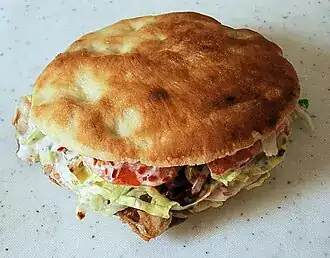
Döner Kebab

English Breakfast
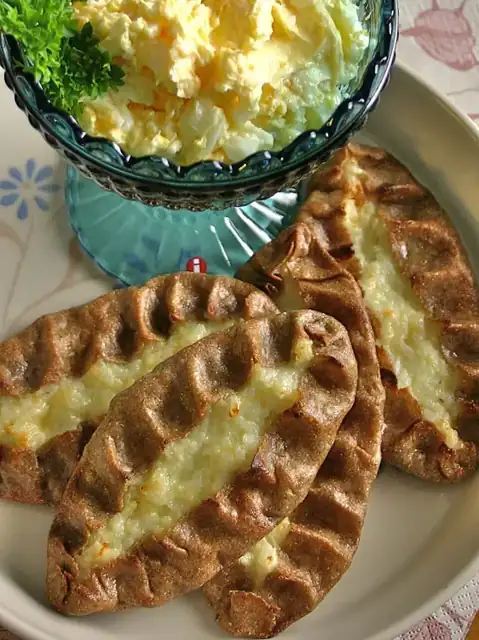
A Taste of Finland: Everyday Foods and Local Traditions