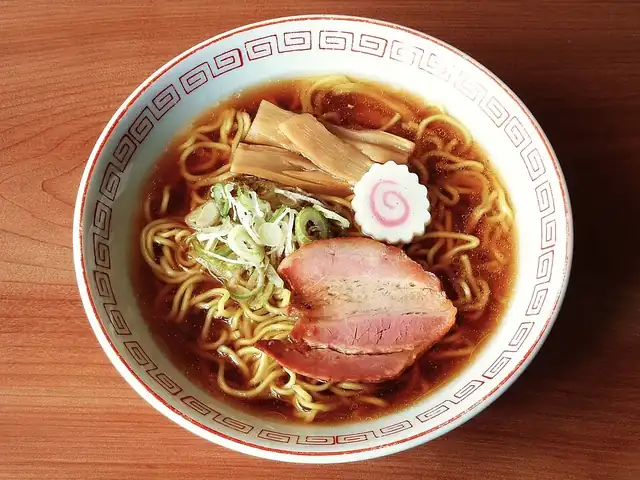
The dish is a starting point for exploring a wider food story. The guide below looks more closely at its background and different forms. When you want to cook, visit the recipe collection for ingredient quantities and step-by-step methods.
Overview
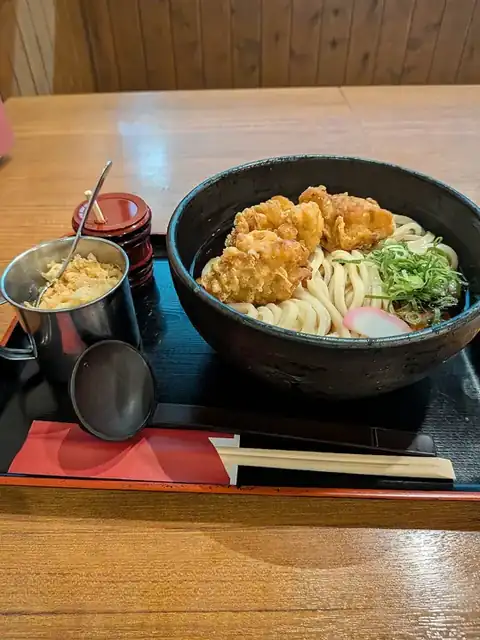
Udon (うどん or 饂飩) is a thick noodle made from wheat flour, used in Japanese cuisine. There are a variety of ways it is prepared and served. Its simplest form is in a soup as kake udon with a mild broth called kakejiru made from dashi, soy sauce, and mirin. It is usually topped with thinly chopped scallions. Other common toppings include prawn tempura, kakiage (mixed tempura fritter), abura-age (sweet, deep-fried tofu pouches), kamaboko (sliced fish cake), and shichimi spice added to taste.
Standard broth differs by region. Dark (koikuchi) soy sauce is added in eastern Japan, while light (usukuchi) soy sauce is added in the west. Instant noodles are often sold in two (or more) versions accordingly.
More unusual variants include stir-fried yaki udon and curry udon made with Japanese curry. Udon is often used as the final dish in shabu shabu or Japanese hot pot.
Dishes
Udon noodles are cooked before eating, usually by boiling in water. Different types of udon are produced to suit different ways of serving them. Udon noodles are usually served chilled in the summer and hot in the winter. In the Edo period, only the thicker wheat noodle was generally called udon, and was served with a hot broth called . The thinner variety, served chilled, was called .
For cold udon, or udon salad, the noodles are usually mixed with usuyaki-tamago, shredded chicken, and fresh vegetables such as cucumber and radish. Toppings of udon soup are chosen to reflect the seasons. Most of the soup toppings are added without cooking them much, although deep-fried tempura is sometimes added. In many of these dishes, udon noodles can be replaced with soba.
Hot
Chikara udon: ("power udon"): topped with toasted mochi rice cakes.
Goboten udon: with deep-fried shredded burdock root.
Haikara udon: ("modern udon"): see tanuki udon. From ハイカラ
Kake udon (in the Kantō region) or su udon (in Kansai): hot udon in broth topped with thinly sliced green onions, and perhaps a slice of kamaboko.
Kamaage udon: served in a communal hot-pot with hot water, and accompanied by a hot dipping sauce of dashi sukiyaki.
Karē nanban or karē udon ("curry udon"): modern udon served in a spicy curry-flavoured broth, which may also include meat or vegetables. The term nanban is a reference to the Nanban trade which influenced Japanese culture for a century until it was banned in 1639 by the Edo Shogunate. Biei, Hokkaido is famous for a unique curry udon.
Kitsune udon: ("fox udon"): topped with aburaage (sweet, deep-fried tofu pouches). The kitsune fox spirits are said to enjoy aburaage. Originated in Osaka.
Maruten udon: topped with maruten, deep-fried large fish cake
Nabeyaki udon: a sort of udon hot-pot, with seafood and vegetables cooked in a nabe, or metal pot. The most common ingredients are tempura shrimp with mushrooms and an egg cracked on top.
Oboro udon: dashi broth with kombu flakes.
Oyako udon: chicken and egg, with sliced onion in a sweetened dashi soup over udon. It has a sweet savory flavor.
Sansai udon: udon with wild edible mountain vegetables.
Su udon: see kake udon
Cold
Bukkake udon, : cold udon served with hot dashi broth poured over it
cold udon served on its own.
Kijōyu udon: served in a cold soup of raw (unpasteurized) soy sauce and sudachi (a type of citrus) juice, sometimes with a bit of grated daikon radish.
Zaru udon: chilled udon noodles topped with shredded nori and served on a . Accompanied by a chilled dipping sauce, usually a strong mixture of dashi, mirin, and soy sauce. Eaten with wasabi or grated ginger.
Japan
There are wide variations in both thickness and shape for udon noodles.
similar to the Hohtoh, from Ōita Prefecture. Nominally a "dumpling soup", it resembles very thick, flat udon.
a thin and firm variant from the Goto Islands. The noodles are coated in camellia oil, a natural preservative made from the seeds of camellias, which are abundant in the Goto Islands.
a slightly translucent, chewy type from Kutchan, Hokkaido. Literally "heavy snow udon", made from the starch of potatoes. The texture is different from normal udon which is made from flour. At the foot of Mount Yōtei, Hokkaido, the biggest producing area of potatoes, "potato starch udon" was eaten as a home food for farmers from long ago. The ratio of potato starch and wheat flour was improved to make it delicious even after a long time. The origin of the name "heavy snow udon" is the foot of Mount Yōtei, a heavy snowfall area, and the appearance of the noodles which is slightly translucent like snow.
a thick and soft type from Fukuoka.
an extreme flat and wide type from Kiryū, Gunma.
Hōtō (rarely , commonly ): a type of miso soup from Yamanashi Prefecture with a flat and wide type udon and vegetables, particularly kabocha. One of the significant differences between usual udon and Hōtō udon is salt. When Hōtō udon is made, salt is not added to the noodle dough.
a thin type from Akita Prefecture.
a soft type, usually eaten with sweet soy sauce, from Ise, Mie.
In Kansai region, a soft and medium thickness type is popular.
Kishimen (or more commonly ): a flat type with wavy edges, a regional specialty from Nagoya.
a lucky preserved food in Kuzu, Tochigi. It looks similar to ears.
Korea
In Korea, authentic Japanese udon dishes are served in numerous Japanese restaurants, while the Korean-style udon noodle soups are served in bunsikjip (snack bars) and pojangmacha (street stalls). Both types are called udong (우동), which is the transliteration of the Japanese word udon (うどん). In Korea, the word udong refers to noodle dishes (typically noodle soup), while the noodles themselves are called udong-myeon (우동면; "udong noodles") and considered a type of garak-guksu (가락국수; "thick noodles"). Common ingredients for udong noodle soup include crowndaisy greens and eomuk (fish cakes), neither of which are very common in Japanese udon dishes.
Palau
There is a dish called udong in Palau, originated from the former Japanese administration. The broth is soy sauce–based like Japanese udon. However, as there were many immigrants from Okinawa, it uses less broth like Okinawa soba. Most notably, the noodle is that of spaghetti, as it is easier to acquire there.
Languages of the neighboring Federated States of Micronesia also have similar loanwords from Japanese udon; Chuukese: wutong, Pohnpeian: udong, Kosraean: utong, and qudoong.
More to savor
Tonkotsu Ramen
Daifuku (Sweet Filled Mochi)
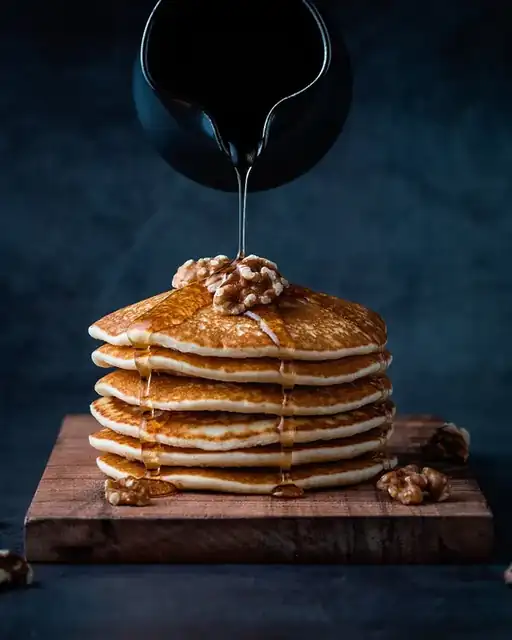
Pancakes Around the Table: One Idea, Many Delicious Forms