This longer reference provides the background behind the topic. Read it alongside the recipe collection when you want to connect an ingredient or food idea with a dish to prepare.
Overview
Vinegar is an odorous aqueous solution of diluted acetic acid and trace compounds that may include flavorings or naturally occurring organic compounds. Vinegar typically contains from 4% to 18% acetic acid by volume.
Usually, the acetic acid is produced by a double fermentationconverting simple sugars to ethanol using yeast, and then converting ethanol to acetic acid using acetic acid bacteria. Many types of vinegar are made, depending on source materials.
The product is now mainly used in the culinary arts as a flavorful, acidic cooking ingredient, salad dressing, or pickling agent. Various types are used as condiments or garnishes, including balsamic vinegar and malt vinegar.
As an easily manufactured mild acid, it has a wide variety of industrial and domestic uses, including functioning as a household cleaner.
Chemistry
The conversion of ethanol and oxygen to acetic acid takes place by the following reaction:
Polyphenols
Vinegar contains numerous flavonoids, phenolic acids, and aldehydes, which vary in content depending on the source material used to make the vinegar, such as orange peel or various fruit juice concentrates.
Production
Commercial vinegar is produced either by a fast or a slow fermentation process. In general, slow methods are used in traditional vinegars, where fermentation proceeds over the course of a few months to a year. The longer fermentation period allows for the accumulation of a nontoxic slime composed of acetic acid bacteria and their cellulose biofilm, known as mother of vinegar.
Fast methods add the aforementioned mother of vinegar as a bacterial culture to the source liquid before adding air to oxygenate and promote the fastest fermentation. In fast production processes, vinegar may be produced in 1–3 days.
Varieties
The source materials for making vinegar are varieddifferent fruits, grains, alcoholic beverages, and other fermentable materials are used.
Fruit
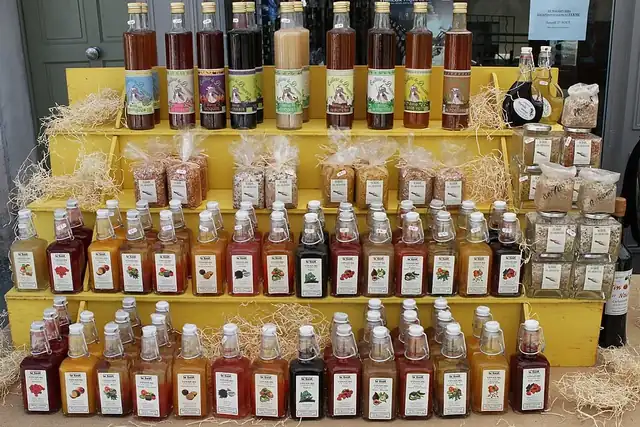
Fruit vinegars are made from fruit wines, usually without any additional flavoring. Common flavors of fruit vinegar include apple, blackcurrant, raspberry, quince, and tomato. Typically, the flavors of the original fruits remain in the final product. Most fruit vinegars are produced in Europe, where a market exists for high-priced vinegars made solely from specific fruits (as opposed to nonfruit vinegars that are infused with fruits or fruit flavors). Several varieties are produced in Asia. Persimmon vinegar, called gam sikcho, is common in South Korea. Jujube vinegar, called zaocu or hongzaocu, and wolfberry vinegar are produced in China. Apple cider vinegar is made from cider or apple must, and has a brownish-gold color. It is sometimes sold unfiltered and unpasteurized with the mother of vinegar present.
It can be diluted with fruit juice or water or sweetened (usually with honey) for consumption.
A byproduct of commercial kiwifruit growing is a large amount of waste in the form of misshapen or otherwise-rejected fruit (which may constitute up to 30% of the crop) and kiwifruit pomace. One of the uses for pomace is the production of kiwifruit vinegar, produced commercially in New Zealand since at least the early 1990s, and in China in 2008.
Vinegar made from raisins is used in cuisines of the Middle East. It is cloudy and medium brown in color, with a mild flavor. Vinegar made from dates is a traditional product of the Middle East, and used in Eastern Arabia.
Palm
Coconut vinegar, made from fermented coconut sap or coconut water, is used extensively in Southeast Asian cuisine (notably the Philippines, where it is known as sukang tuba), as well as in some cuisines of India and Sri Lanka, especially Goan cuisine. A cloudy, white liquid, it has a particularly sharp, acidic taste with a slightly yeasty note.
In the Philippines, other types of vinegar are made from palm sap. Like coconut vinegar, they are by-products of tubâ (palm wine) production. Two of the most widely produced are nipa palm vinegar (sukang nipa or sukang sasa) and kaong palm vinegar (sukang kaong or sukang irok). Along with coconut and cane vinegar, they are the four main traditional vinegar types in the Philippines and are an important part of Filipino cuisine. Nipa palm vinegar is made from the sap of the leaf stalks of nipa palm. Its flavor has notes of citrus and imparts a distinctly musky aroma. Kaong palm vinegar is made from the sap of flower stalks of the kaong palm. It is sweeter than all the other Philippine vinegar types and is commonly used in salad dressing.
Vinegar from the buri palm sap is also produced, but not with the same prevalence as coconut, nipa, and kaong vinegars. Kaong palm vinegar is also produced in Indonesia and Malaysia, though it is not as prevalent as in the Philippines because the palm wine industry is not as widespread in these Muslim-majority countries.
Culinary uses
Vinegar is commonly used in food preparation, in particular as pickling liquids, vinaigrettes, and other salad dressings. It is an ingredient in sauces, such as hot sauce, mustard, ketchup, and mayonnaise. Vinegar is sometimes used in chutneys. It is often used as a condiment on its own, or as a part of other condiments. Marinades often contain vinegar. Soups sometimes have vinegar added to them, as is the case with hot and sour soup. In terms of its shelf life, vinegar's acidic nature allows it to last indefinitely without the use of refrigeration; it is essentially already "spoiled".
Beverages
Beverages made using vinegar include posca in ancient Rome. The ancient Greek oxymel was made from vinegar and honey, and sekanjabin is a traditional Persian drink similar to oxymel''. Other preparations, known colloquially as "shrubs", range from simply mixing sugar water or honey water with small amounts of fruity vinegar, to making syrup by laying fruit or mint in vinegar for several days, then sieving off solid parts and adding considerable amounts of sugar.
More to savor

Chicken Vindaloo
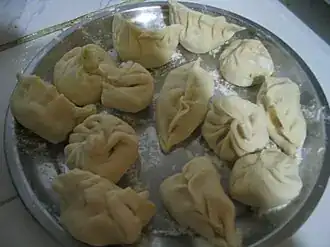
Tibetan Meat Momos
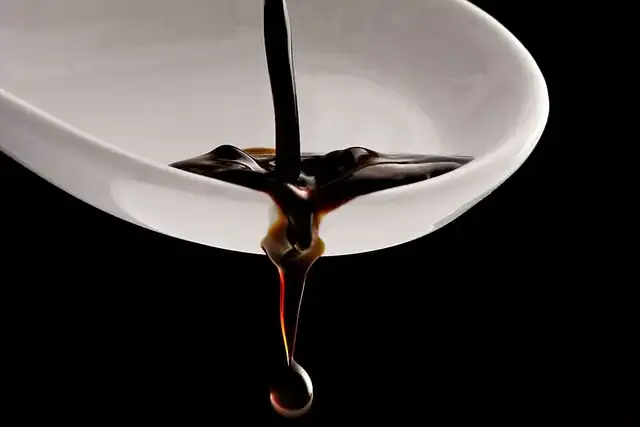
Balsamic vinegar at the Table: The Food Behind the Name