A drink can be an everyday routine, something shared with company, or a way to explore a food tradition. The background below looks more closely at the preparation and story behind the cup or glass.
Overview
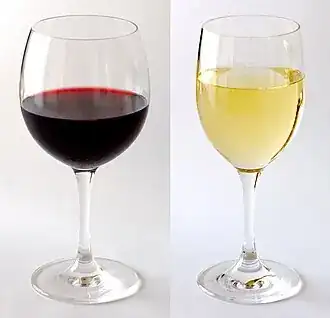
Wine is an alcoholic drink made from fermented grape juice. It is produced and consumed in many regions around the world, in a wide variety of styles which are influenced by different varieties of grapes, growing environments, viticulture methods, and production techniques.
Wine has been produced for thousands of years, the earliest evidence dating from c. 6000 BCE in present-day Georgia. Its popularity spread around the Mediterranean during Classical antiquity, and was sustained in Western Europe by winemaking monks and a secular trade for general drinking. New World wine was established by settler colonies from the 16th century onwards, and the wine trade increased dramatically up to the latter half of the 19th century, when European vineyards were largely destroyed by the invasive pest phylloxera. After the Second World War, winemakers focused on quality and marketing to cater for a more discerning audience, and wine remains a popular drink in much of the world.
Styles
The term "wine" typically refers to a drink made from fermented grape juice; drinks from other fruits are generically called fruit wine. It does not include drinks made from starches (e.g. beer), honey (mead), apples (cider), pears (perry), or a liquid which is subsequently distilled to make liquor. Most fruits other than grapes lack sufficient fermentable sugars, are overly acidic, and do not have enough nutrients for yeast, necessitating winemaker intervention. They do not typically improve with age, and last less than a year after bottling. Fruit wines are particularly popular in North America and Scandinavia.
The sweetness of wine is determined by the amount of residual sugar left after fermentation. Dessert wines have a high level of residual sugar remaining after fermentation. There are several ways of making sweet wines, such as the use of grapes affected by noble rot (e.g. Sauternes), exposed to freezing temperatures (e.g. icewine), or dried (e.g. Vin Santo).
Viticulture
Wine is usually made from one or more varieties of the European species Vitis vinifera, such as Chardonnay and Cabernet Sauvignon. Most Vitis vinifera vines have been grafted onto North American species' rootstock, a common practice due to their resistance to phylloxera, a root louse that eventually kills the vine.
In the context of wine production, terroir is a concept that encompasses the growing environment of the vine, including elevation and slope of the vineyard, type and chemistry of soil, and climatic and seasonal conditions. The range of possible combinations of these factors can result in great differences in the characteristics and quality of the resultant wine.
Vinification
There are a number of different ways of making wine in a modern winery, each decision affecting the final outcome. The first step is harvesting the grapes, the timing of which depends on sugar and acid levels, any diseases affecting the crop, and the weather, among other factors. Grapes are harvested by hand or machine, sorted to select those of sufficient quality, typically destemmed, and then crushed to release the juice. The liquid may macerate for a few hours before being pressed and clarified.
The liquid is then transferred to a container for fermentation, which is typically made of stainless steel, wood or concrete, and either open or closed. Yeast is naturally present on grape skins, but most producers choose to use a specific strain for their predictable behaviour, allowing them to control the flavors produced. The yeast consumes the sugars and converts them into alcohol, heat, and carbon dioxide. For red wines, winemakers may choose to encourage the extraction of tannins and flavor from the grape skins by agitating the mixture. If permitted by law, the winemaker may include additives such as sugar, to increase the alcohol content (chaptalization), or adjust the acid levels. Some wines undergo a secondary, malolactic fermentation, in which the harsher malic acid is converted into lactic acid by bacteria.
Serving
Decanting involves pouring the wine into an intermediate container before serving it in a glass, which allows the removal of undesirable sediments that may have formed in the wine. Sediment is more common in older bottles. Aeration in a decanter may benefit younger wines by "opening them up", releasing more flavor, but aerating older wines can oxidize them.
As a standard rule, red wines are served at what would historically have been "room temperature" (now, with modern heating and insulation, this would be considered the temperature of a cool room), whites chilled, and sparkling and sweeter whites even cooler. Volatile flavor compounds evaporate more easily at higher temperatures, so warmth increases the aromatic intensity. However, alcohol begins to evaporate noticeably over 20 C, and the carbon dioxide in sparkling wines is released too quickly at temperatures of about 18 C. The palate is more sensitive to sweetness at higher temperatures, so when the sweetness is not balanced by acidity a wine should be served cooler. Cooler temperatures suppress aroma, and therefore faults detectable on the nose, but increase sensitivity to tannins and bitterness.
Culinary uses
Wine is important in cuisine; it can be used in preparation and tenderizing, as well as a flavor agent in marinades, stocks, stews (e.g. coq au vin, beef bourguignon), and sauces (e.g. in wine sauces). Many desserts also contain wine, such as zabaione and trifle. Ethanol evaporates at 78 C, so when wine is heated past this point it likely loses much of its alcohol content, and its acidity and sugars become more prominent. The necessary quality of cooking wine is a matter of debate, but faulty wine is not appropriate for culinary use, and the range of flavor compounds in a fine wine do not survive heating.
Social consumption
People drink wine for a number of reasons, including to aid socialization, to pair with food, and simply as a sensory experience. Wine is increasingly viewed as a "lifestyle" product, with a concomitant interest in associated activities such as wine tourism. Producers have used an increased interest in the Mediterranean diet, with wine as one of its constituent parts, to drive sales; in continental western Europe, wine is considered an everyday pleasure.
In London, wine bars date from the 19th century, and they became popular in the 1970s in France, and the 1980s in London and New York City. They have experienced a resurgence in more recent years, and in Britain are often based on European cafés.
More to savor

Tattie Scones

Austrian Napkin Dumpling (Serviettenknödel)

Mead: The Honey-Based Drink with a Long Food History