A drink can be an everyday routine, something shared with company, or a way to explore a food tradition. The background below looks more closely at the preparation and story behind the cup or glass.
Overview
Beer is an alcoholic beverage produced by the brewing and fermentation of starches from cereal grain—most commonly malted barley, although wheat, maize, rice, and oats are also used. The grain is mashed to convert starch in the grain to sugars, which dissolve in water to form wort. Fermentation of the wort by yeast produces ethanol and carbonation in the beer. Beer is one of the oldest and most widely consumed alcoholic drinks in the world, and one of the most popular of all drinks. Most modern beer is brewed with hops, which add bitterness and other flavours and act as a natural preservative and stabilizer. Other flavouring agents, such as gruit, herbs, or fruits, may be included or used instead of hops. In commercial brewing, natural carbonation is often replaced with forced carbonation.
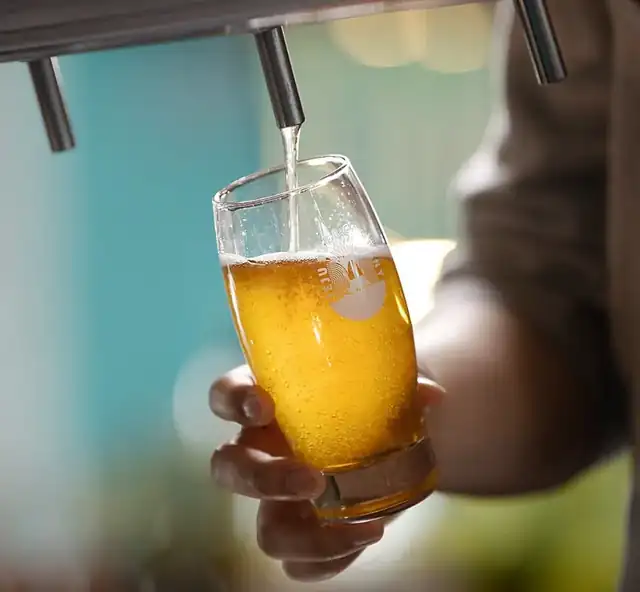
Beer is distributed in bottles and cans, and is commonly available on draught in pubs and bars. The brewing industry is a global business, consisting of several dominant multinational corporations and many thousands of smaller producers ranging from brewpubs to regional breweries. The strength of modern beer is usually around 4% to 6% alcohol by volume (ABV).
Early civilisations
Beer is recorded in the written history of ancient Egypt, and archaeologists speculate that beer was instrumental in the formation of civilisations. The Sumerians drank a variety of beers, eight types from barley, 12 types from wheat and 3 from a mixture of grains. The Sumerian goddess Ninkasi was believed to oversee the brewing process, and the production and distribution of beer was attributed there to women. Approximately 5000 years ago, workers in the city of Uruk (modern day Iraq) were paid by their employers with volumes of beer. During the building of the Egyptian pyramids, each worker got a daily ration of four to five litres of beer, which served as both nutrition and refreshment and was crucial to the pyramids' construction.
Modern
In 1912, brown bottles began to be used by the Joseph Schlitz Brewing Company of Milwaukee, Wisconsin, in the United States. This innovation has since been accepted worldwide as it prevents light rays from degrading the quality and stability of beer. The brewing industry is a global business, consisting of several dominant multinational companies and many thousands of smaller producers, ranging from brewpubs to regional breweries. As of 2006, more than 133 e9l of beer are sold per year, producing global revenues of US$294.5 billion. In 2010, China's beer consumption hit 45 e9l, or nearly twice that of the United States, but only 5 per cent sold were premium beers, compared with 50 per cent in France and Germany. Beer is the most widely consumed of all alcoholic drinks.
A widely publicised study in 2018 suggested that sudden decreases in barley production due to extreme drought and heat could in the future cause substantial volatility in the availability and price of beer.
Process
The process of making beer is brewing. It converts the grain into a sugary liquid called wort and then ferments this into beer using yeast. The first step, mixing malted barley with hot water in a mash tun, is "mashing". The starches are converted to sugars, and the sweet wort is drained off. The grains are washed to extract as much fermentable liquid from the grains as possible. The sweet wort is put into a kettle, or "copper", and boiled. Hops are added as a source of bitterness, flavour, and aroma. The longer the hops are boiled, the more bitterness they contribute, but the less hop flavour and aroma remain. The wort is cooled and the yeast is added. The wort is then fermented, often for a week or longer.
Ingredients
The basic ingredients of beer are water; a starch source, usually malted barley; a brewer's yeast to produce the fermentation; and a flavouring such as hops. A mixture of starch sources may be used, with a secondary carbohydrate source, such as maize (corn), rice, wheat, or sugar, often termed an adjunct, especially when used alongside malted barley. Less widely used starch sources include millet, sorghum, and cassava root in Africa; potato in Brazil; and agave in Mexico.
Water is the main ingredient, accounting for 93% of beer's weight. The level of dissolved bicarbonate influences beer's finished taste. Due to the mineral properties of each region's water, specific areas were originally the sole producers of certain types of beer, each identifiable by regional characteristics. Dublin's hard water is well-suited to making stout, such as Guinness, while the Plzeň Region's soft water is ideal for brewing Pilsner, such as Pilsner Urquell. The waters of Burton in England contain gypsum, which benefits making pale ale to such a degree that brewers of pale ale add gypsum in a process known as Burtonisation.
Industry
In the 21st century, larger breweries have repeatedly taken over smaller breweries. In 2002, South African Breweries bought the North American Miller Brewing Company to found SABMiller, becoming the second-largest brewery after North American Anheuser-Busch. In 2004, the Belgian Interbrew was the third-largest brewery by volume, and the Brazilian AmBev was the fifth-largest. They merged into InBev, becoming the largest brewery. In 2007, SABMiller surpassed InBev and Anheuser-Busch when it acquired Royal Grolsch, the brewer of Dutch brand Grolsch. In 2008, when InBev (the second-largest) bought Anheuser-Busch (the third-largest), the new Anheuser-Busch InBev company became again the largest brewer in the world.
As of 2020, according to the market research firm Technavio, AB InBev was the largest brewing company in the world, with Heineken second, CR Snow third, Carlsberg fourth, and Molson Coors fifth.
Top-fermented beers
Top-fermented beers are most commonly produced with Saccharomyces cerevisiae, a top-fermenting yeast which clumps and rises to the surface, typically between 15 and 25 C. At these temperatures, yeast produces significant amounts of esters and other secondary flavour and aroma products, and the result is often a beer with slightly "fruity" compounds resembling apple, pear, pineapple, banana, plum, or prune, among others. After the introduction of hops into England from Flanders in the 15th century, "ale" came to mean an unhopped fermented brew, while "beer" meant a brew with an infusion of hops. The term 'real ale' was coined by the Campaign for Real Ale (CAMRA) in 1973 for "beer brewed from traditional ingredients, matured by secondary fermentation in the container from which it is dispensed, and served without the use of extraneous carbon dioxide".
It is applied to both bottle conditioned and cask conditioned beers.
More to savor
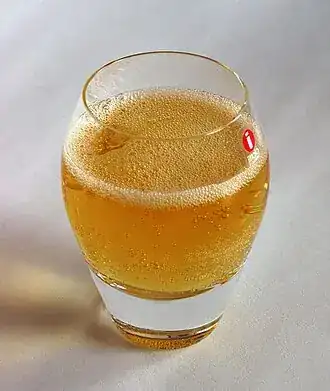
Traditional Finnish Lemon Mead (Sima)

Crêpes I
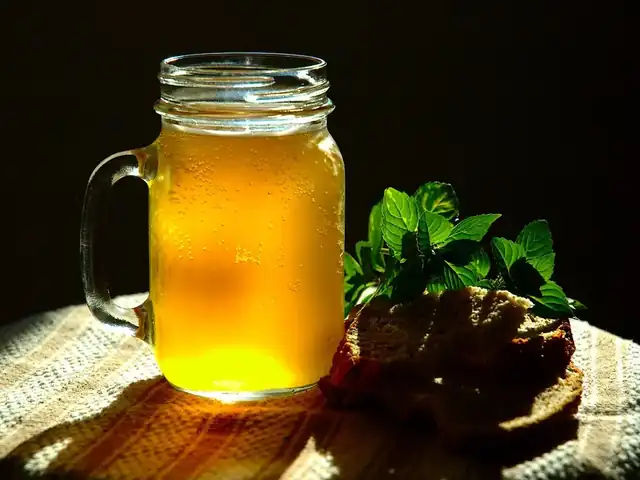
Kvass: The Fermented Grain Drink with a Sweet-and-Sour Story