A drink can be an everyday routine, something shared with company, or a way to explore a food tradition. The background below looks more closely at the preparation and story behind the cup or glass.
Overview
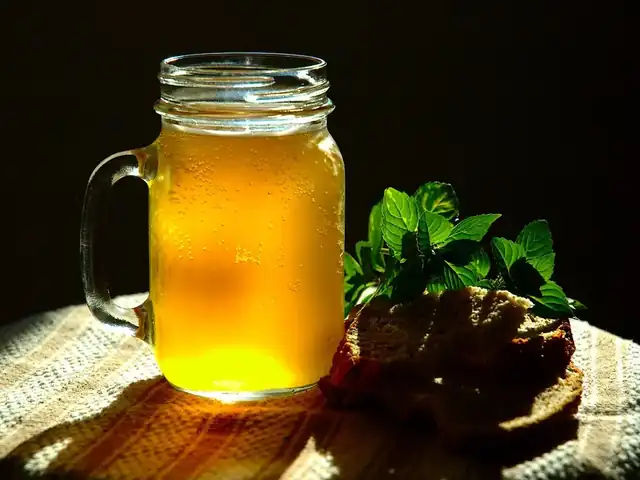
Kvass is a fermented, cereal-based, low-alcoholic beverage of cloudy appearance and a sweet and sour taste.
Kvass originates from northeastern Europe, where grain production was considered insufficient for beer to become a daily drink. The first written mention of kvass is found in Primary Chronicle, describing the celebration of Vladimir the Great's baptism in 988.
Traditionally, kvass is made from a mash of rye bread or rye flour and malt soaked in hot water, fermented for about 12 hours with the help of sugar and bread yeast or baker's yeast at room temperature. In industrial methods, kvass is produced from wort concentrate combined with various grain mixtures. It is a drink known in Belarus, Estonia, Latvia, Lithuania, Moldova, Armenia, Georgia, Poland, Russia, and Ukraine. Kvass (or beverages similar to it) are also popular in some parts of China, Finland, Kazakhstan, and Uzbekistan.
Terminology
The word kvass is ultimately from Proto-Indo-European base *kwh₂et- ('to become sour'). In English it was first mentioned in a text around 1553 as quass. Nowadays, the name of the drink is almost the same in most languages: in Polish: kwas chlebowy (to differentiate it from kwas, 'acid', originally from kwaśny, 'sour'); квас, kvas; квас, kvas; квас/хлібний квас/сирівець, kvas/khlibny kvas/syrivets; kvass; cvas; Կվաս; kvasz; квас/kvas; 格瓦斯/克瓦斯, géwǎsī/kèwǎsī; Eastern Finnish: vaasa. Non-cognates include kali, kalja, ბურახი, burakhi; dzersis , dzyra (similar gira, similar to dzira), bröddricka .
Production
In the traditional method, either dried rye bread or a combination of rye flour and rye malt is used. The dried rye bread is extracted with hot water and incubated for 12 hours at room temperature, after which bread yeast and sugar are added to the extract and fermented for 12 hours at 20 C. Alternatively, rye flour is boiled, mixed with rye malt, sugar, and baker's yeast and then fermented for 12 hours at 20 C.
The simplest industrial method produces kvass from a wort concentrate. The concentrate is warmed up and mixed with a water and sugar solution to create wort with a sugar concentration of 5–7% and pasteurized to stabilize it. After that, the wort is pumped into a fermentation tank, where baker's yeast and lactic acid bacteria culture is added, and the solution is fermented for 12–24 hours at 12 to 30 C. Only around 1% of the extract is fermented out into ethanol, carbon dioxide, and lactic acid. Afterwards, the kvass is cooled to 6 C, clarified through either filtration or centrifugation, and adjusted for sugar content, if necessary.
Initially, it was filled in large containers from which the kvass was sold on streets, but now, the vast majority of industrially produced kvass is filled and sold in 1–3-litre plastic bottles and has a shelf life of 4–6 weeks.
Kvass is usually 0.5–1.0% alcohol by weight, but may sometimes be as high as 2.0%.
Belarus
Belarus has several breweries producing kvass: Alivaria Brewery, Babrujski Brovar, and Krinitsa (company). It also has a variety of kvass tasting and entertainment festivals. The largest show takes place in the city of Lida.
Estonia
In Estonia, kvass is known as kali. Initially, it was made from either brewer's spent grain or wort left to ferment in a closed container, but later, special kvass bread (kaljaleib) or industrially produced malt concentrate started to be used. Nowadays, kali generally is industrially produced with the use of pasteurization, the addition of preservatives, and artificial carbonation.
Finland
In Finland, a fermented drink made from a mixture of rye flour and rye malt was ubiquitous in parts of Eastern Finland and was heated in the oven. It was called kalja (which can also be used to refer to small beer) or vaasa (in Eastern Finnish), while nowadays the drink is often known as kotikalja and is available in many work canteens, gas stations, and lower-end restaurants.
Traditionally, kalja was usually made in households once a week from a mixture of malted and unmalted rye grains. Other grains, such as oats or barley, were also sometimes used; occasionally, leftover potatoes or pieces of bread were added. Everything was mixed with water in a metal cauldron or a clay pot and kept warm in the oven or by the stove for at least six hours for the mixture to darken and sweeten. Sometimes, the grain solids were filtered out through lautering. In Eastern Finland, the mixture was formed into large loaves and briefly baked for the crust to turn brown.
The porridge or pieces of the malt bread were mixed into a wooden cask with water and fermented for one or two days with a previous batch, a sourdough starter, spontaneously or in more recent times with commercial baker's yeast. In the early 20th century, with sugar becoming more readily available, it started replacing the malting process, and modern kalja is made from dark rye malt, sugar, and baker's yeast.
Non-bread varieties
A traditional drink made in Ukraine was pear and apple kvas, produced by keeping dried fruit in water for two months. This kind of drink was popular at banquets and also kept the population from consuming low-quality water. Another popular traditional speciality of Ukraine is beetroot kvas, which could be consumed as a drink or used as an ingredient of other dishes, most famously borshch. Some types of non-bread kvass have been produced to be sold in the United States including beet and ginger and sauerkraut varieties.
More to savor
Sylheti Rice Pudding
Injera (Ethiopian Teff Flatbread)
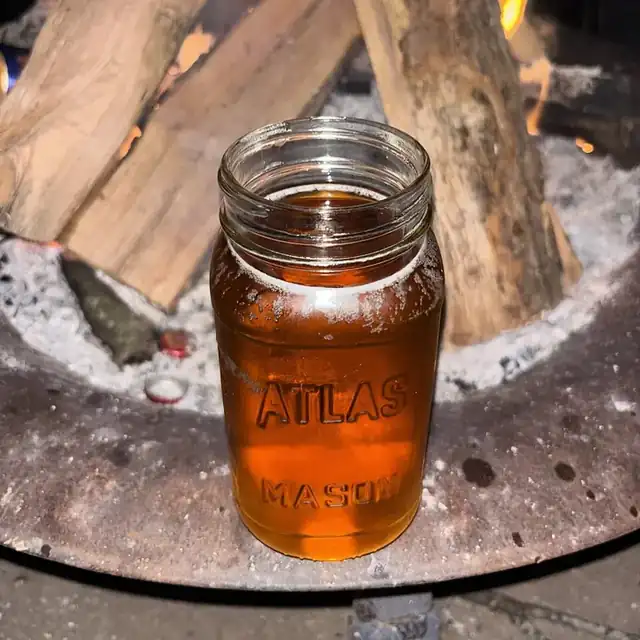
Cider: The Apple Drink with Many Local Traditions